






1. Ragi (Finger Millet)
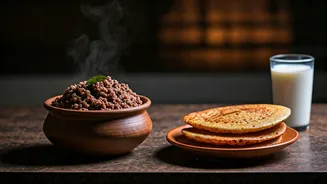
Often called a nutritional powerhouse, ragi is a fantastic monsoon grain because it is light, easy to digest, and packed with calcium and iron. Its warming nature is comforting during damp weather, helping to keep seasonal ailments at bay. Modern home
cooks appreciate ragi's versatility. It can be used to make savoury dosas, which pair beautifully with coconut chutney for a light yet filling meal. Other popular options include soft ragi rotis, hearty porridge, or even steamed dumplings (ragi mudde) served with a spicy sambar. Its high fibre content also aids in regular bowel movements, a common concern when the digestive system becomes sluggish in the monsoon.
2. Bajra (Pearl Millet)
Bajra is traditionally consumed in winters but is an excellent choice for the monsoon in moderation. It is known for being rich in iron, magnesium, and fibre, which supports gut health and prevents constipation. What makes it suitable for modern diets is its alkaline nature, which can help neutralise stomach acidity—a frequent complaint during the humid season. While bajra rotis are a classic, contemporary kitchens are using it to create innovative dishes like bajra khichdi, combining it with moong dal for a complete protein meal. You can also make savoury pancakes or even add it to multi-grain batters for pakoras, offering a healthier twist on a quintessential monsoon snack.
3. Amaranth (Rajgira)
Amaranth, or rajgira, is no longer just a fasting food. This pseudo-cereal is gaining popularity as an everyday grain due to its incredible health benefits. It is a complete protein, containing all nine essential amino acids, and is naturally gluten-free. Amaranth is also rich in iron, calcium, and magnesium. During the monsoon, its easy digestibility makes it a gentle option for the gut. Savoury applications are numerous: you can make rajgira parathas, add it to vegetable cutlets for a binding agent and a protein boost, or cook it as a porridge with vegetables and spices for a quick, nourishing meal.
4. Buckwheat (Kuttu)
Like amaranth, buckwheat (or kuttu) is another pseudo-cereal often associated with fasting but is perfect for the rainy season. It is high in fibre, making it easy on the digestive system, and boasts anti-inflammatory properties. Its low glycemic index also helps in managing blood sugar levels. Buckwheat is gluten-free, catering to the growing demand for wheat alternatives in urban homes. While kuttu ki puri is a festive favourite, its flour can be used to make savoury crepes, pancakes, or cheelas filled with spiced vegetables. Its earthy, nutty flavour adds a unique dimension to dishes, moving it beyond special occasions into regular monsoon meal planning.
5. Barnyard Millet
Barnyard millet is one of the oldest and most nutritious millets, cherished for being extremely easy to digest and low in calories. It is an ideal grain for the monsoon when the digestive fire (agni) is considered weaker. This gluten-free grain is a great source of fibre and iron. In modern cooking, it’s celebrated as a fantastic substitute for rice. You can prepare a flavourful barnyard millet pulao loaded with monsoon vegetables, or a creamy, savoury porridge that is both comforting and light. Its ability to cook quickly makes it a convenient choice for busy weekdays, aligning perfectly with the needs of a contemporary lifestyle.