






The Profile of Plain Sugar
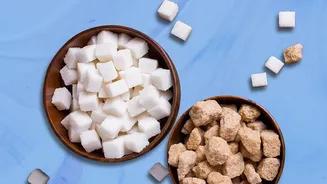
Table sugar, or sucrose, is a simple carbohydrate refined from sugar cane or sugar beets. The refining process strips away virtually all other nutrients, including vitamins, fibre, and minerals. What’s left is pure sweetness. A tablespoon of granulated
white sugar contains about 49 calories and 12.5 grams of sugar. It has no significant amount of any vitamin or mineral. Brown sugar might seem healthier because of its colour and moisture, but it is typically just white sugar with a small amount of molasses added back in. While this does add trace amounts of minerals like potassium and calcium, the quantities are too minuscule to offer any health advantage.
Honey's Natural Composition
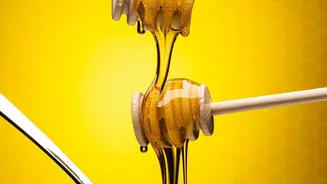
Honey is also a form of sugar, primarily composed of fructose and glucose, along with water. However, unlike refined sugar, it is a natural product created by bees. Because it is less processed, honey retains small amounts of other substances from the nectar and pollen. These include enzymes, amino acids, antioxidants, and, most importantly for this comparison, trace minerals. A tablespoon of honey, which is denser than sugar, contains about 64 calories and 17 grams of sugar. It also contains tiny amounts of minerals like potassium, calcium, iron, and zinc. Darker honeys, such as buckwheat, tend to have a higher mineral and antioxidant content than lighter varieties.
A Head-to-Head Mineral Matchup
So, honey definitely has minerals, and sugar essentially has none. On paper, that’s a clear win for honey. But the critical question is whether the amount is significant. Let's look at the numbers. A tablespoon of honey (about 21 grams) provides approximately 11 mg of potassium, 1.3 mg of calcium, and 0.09 mg of iron. By contrast, a tablespoon of granulated sugar provides nearly zero of these minerals. While honey is the undisputed winner in containing these micronutrients, the victory is less impressive when you consider the scale.
Putting It All into Perspective
The mineral content in honey is often described as being in 'trace amounts', and for good reason. The recommended daily intake for an adult for potassium is around 2,600–3,400 mg. That tablespoon of honey with its 11 mg of potassium provides less than 0.5% of your daily need. You would have to eat an enormous and unhealthy amount of honey to get a meaningful dose of minerals from it. For comparison, a single medium-sized banana contains over 400 mg of potassium. Even when compared to other 'unhealthy' foods, a tablespoon of hummus offers more iron, calcium, and magnesium than a tablespoon of honey. The reality is that the minerals in honey are present, but in such tiny quantities that they have no real impact on your overall nutrient intake.
Beyond the Minerals
While the mineral debate is fairly one-sided in its conclusion, there are other differences to consider. Honey has a slightly lower glycemic index (GI) than sugar, meaning it may raise blood sugar a bit more slowly, although this effect is modest. This varies by the type of honey. Some studies also point to honey's antioxidant and antimicrobial properties, particularly in raw, unpasteurized forms, which are benefits that sugar does not offer. It has also been recommended as a natural remedy for coughs. However, from a caloric and sugar-content perspective, both should be consumed in moderation as part of a balanced diet.