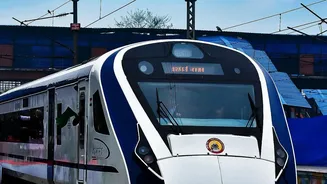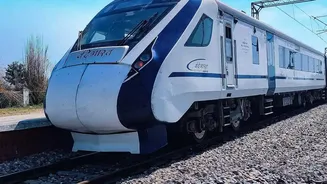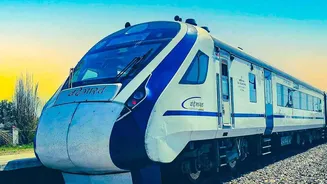





The much-anticipated Vande Bharat sleeper trains are generating significant buzz, and new details reveal a design focused squarely on passenger experience. One subtle but crucial innovation is a buffer zone at the coach entrance. Here’s what it means.
The Purpose of the Entrance Buffer
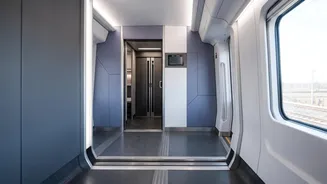
One of the most thoughtful additions to the Vande Bharat sleeper coach is a special zone separating the main cabin from the vestibule area that connects coaches. This isn't just empty space; it’s a carefully designed buffer. This area features automatic doors that create a partition, effectively sealing the passenger compartment. The primary goal is to drastically reduce the noise, vibrations, and air pressure disturbances that passengers often experience from the connecting gangway. Anyone who has tried to sleep in a berth near the coach door knows the constant clatter and draft can be disruptive. By isolating the cabin, Indian Railways aims to create a much quieter and more serene environment, allowing for a more restful journey, especially overnight. This small detail signals a major shift in design philosophy, prioritizing peace and quiet inside the coach.
A Focus on Aircraft-Like Ambiance
The entrance buffer is part of a broader strategy to significantly lower the Noise, Vibration, and Harshness (NVH) levels within the train. Engineers are targeting an experience more akin to air travel than conventional train journeys. This has been a key deliverable for the consortium of Rail Vikas Nigam Limited (RVNL) and Russia's TMH, which is behind one of the sleeper projects. The goal is to make conversations, sleep, and relaxation easier by minimising the background rumble and carriage sway. This is achieved not just through the entrance design but also through the use of advanced sound-dampening materials in the coach walls, floors, and windows. The result should be a premium travel experience that allows passengers to arrive at their destination feeling more refreshed.
Redesigned for Comfort and Convenience
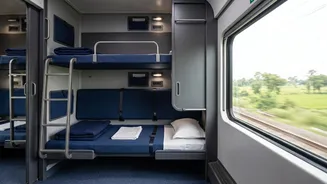
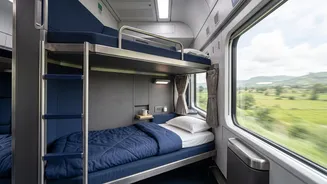
Beyond the quest for quiet, the entire interior has been re-imagined. A common pain point on sleeper trains has always been the ladder for the middle and upper berths. The new design features a gentler angle and wider, more ergonomic steps, making the climb safer and more comfortable. The berths themselves have improved cushioning to provide better support. The aesthetics have also been upgraded with a sophisticated colour scheme of cream, wood, and blue, creating a calming atmosphere. Ambient floor-level lighting and overhead lights are designed to be soft and unobtrusive, guiding passengers at night without waking up the entire coach. Even the windows are fitted with blinds that offer more effective light blocking than the traditional curtains, giving passengers more control over their environment.
Upgrades in Safety and Accessibility
The new sleeper coaches also incorporate modern safety and accessibility features. Sensor-based inter-communication doors mean passengers won't have to wrestle with heavy doors while moving between coaches. Public announcement and passenger information systems are integrated throughout the train, ensuring everyone stays informed. For emergencies, the coaches are fitted with talkback units, allowing passengers to communicate directly with the train crew. Accessibility has been a key consideration, with at least one Divyangjan-friendly toilet per train. The toilets themselves have been upgraded to a vacuum system, similar to those found on airplanes, which is cleaner and more efficient. These features collectively enhance both the perception and reality of a safer, more userfriendly journey.
The Road Ahead for Sleeper Travel
The first prototype of the Vande Bharat sleeper is being manufactured by BEML Ltd in Bengaluru, in collaboration with Indian Railways' Integral Coach Factory (ICF) in Chennai. The initial trainset will consist of 16 coaches, including AC 1, AC 2, and AC 3 tiers, with a total capacity of over 800 passengers. Once the prototype is ready, it will undergo extensive testing before commercial services begin. With a top speed of 160 km/h, these trains are set to rival the Rajdhani Express services and are expected to become a new benchmark for overnight rail travel in India. The successful rollout of these sleeper trains will mark a significant milestone in the modernization of Indian Railways, offering a compelling and comfortable alternative for long distance travel.