



The Myth's Famous Origin
The idea that indoor plants are powerful air cleaners can be traced back to a landmark 1989 NASA study. Facing the challenge of purifying air in sealed environments like space stations, researchers found that certain common houseplants could indeed remove
volatile organic compounds (VOCs) like benzene and formaldehyde from small, sealed chambers. The study was groundbreaking, identifying specific plants that were particularly effective in this lab setting. Over the years, these findings were widely circulated and simplified, leading to the popular and comforting belief that a few potted plants could significantly improve the air quality in our homes and offices.
A Lab Is Not a Living Room
The crucial detail often lost in translation is the environment where the NASA study was conducted. These experiments used small, airtight chambers—typically about one cubic meter—into which they pumped single VOCs and observed how a plant reacted over many hours or days. A typical home or office is vastly different. It is a much larger, more complex environment with constant air exchange from windows, doors, and ventilation systems. As one recent review from researchers at Drexel University highlighted, the natural ventilation in a building usually removes VOCs much faster than plants can. The slow and steady work of a plant simply cannot keep up with the dynamics of a real-world room.
The Sheer Number of Plants Required
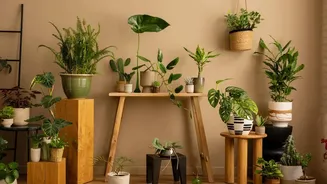
So, do plants clean the air at all? Yes, but at a rate that is practically insignificant in a normal-sized room. To actually replicate the air-cleaning effects seen in the lab, the numbers become staggering. Several follow-up analyses and reviews of the past 30 years of research have concluded you would need a jungle, not just a few plants. The general estimate suggests that to make a meaningful difference, you would require anywhere from 10 to 1,000 plants per square meter of floor space. For an average 1,500-square-foot home, that could mean having over 680 plants to achieve a noticeable effect on air quality. For most people, creating a personal indoor rainforest of that density is simply not feasible.
What Are VOCs Anyway?
Volatile organic compounds are gases emitted from thousands of everyday products. These can include paints, cleaning supplies, disinfectants, air fresheners, furniture, carpets, and even dry-cleaned clothes. Common VOCs like formaldehyde and benzene can have concentrations up to ten times higher indoors than outdoors. Exposure can lead to short-term effects like headaches and eye, nose, and throat irritation, while long-term exposure is linked to more serious health concerns. While plants are not the solution, reducing VOCs is still important. You can do this by choosing low- or no-VOC products, ensuring good ventilation by opening windows, and using high-quality air purifiers.
The Real, Proven Benefits of Plants
While they may not be effective air purifiers, the case for keeping houseplants is still incredibly strong. Their benefits to our mental and emotional well-being are well-documented. Studies have shown that interacting with indoor plants can reduce psychological and physiological stress, lower blood pressure, and create feelings of comfort and calm. Being around plants can improve mood, concentration, and productivity, making them a valuable addition to both home and office environments. They add beauty, a touch of nature, and give us a sense of connection to the world outside, which is a powerful benefit in its own right.