
What Exactly Are Bharat Stage Norms?
Think of Bharat Stage (BS) standards as a rulebook for how much pollution a new vehicle is allowed to produce. Introduced in 2000 and modelled after European regulations, these norms set progressively stricter limits on harmful pollutants like nitrogen
oxides (NOx), particulate matter (PM), and carbon monoxide (CO) emitted from a vehicle's exhaust. India has steadily tightened these rules over the years, making a significant jump directly from BS-IV to BS-VI in 2020 to accelerate its fight against air pollution. The upcoming BS-VII norms are the next chapter in this ongoing effort to improve public health and environmental quality by making our vehicles cleaner.
BS-VII: More Than Just Tailpipe Emissions
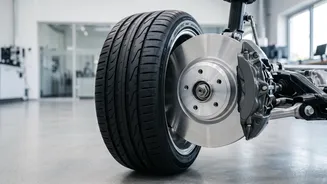
The shift from BS-VI to BS-VII is not just about lowering exhaust emission limits. In fact, for passenger cars, many of the core pollutant limits will remain similar to the current BS-VI standards. The real evolution is in the scope and strictness of monitoring. For the first time, Indian regulations will address non-exhaust emissions, including pollution from brake dust and tyre wear, which are significant sources of microplastics and particulate matter. BS-VII will also mandate stricter real-world driving emission (RDE) tests, ensuring cars meet standards on actual roads, not just in labs. Furthermore, the rules will require capturing even smaller, more harmful ultrafine particles by lowering the measurement threshold from 23 to 10 nanometres.
A Phased Rollout Plan
The government is taking a staggered approach to implementation, giving the industry time to adapt. According to the draft notification, the plan begins with new passenger cars and SUVs, which will need to comply with BS-VII standards starting from April 1, 2029. Next, light commercial vehicles and pick-up vans will come under the new regulations from 2030. Finally, heavy-duty vehicles like buses and trucks, which face significant emission reduction targets of 20 to 50%, will need to meet the norms from April 2031. A separate timeline for two-wheelers is expected to be announced later. Importantly, these rules apply only to newly manufactured vehicles; existing cars, including BS-VI models, will not be affected.
The On-Board Watchdogs
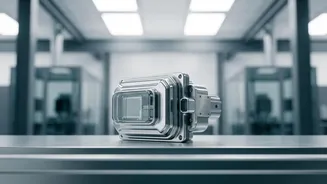
A key technological feature of the BS-VII era will be enhanced surveillance systems within the vehicles themselves. New cars will be required to have an On-Board Monitoring (OBM) system. This technology will continuously track a vehicle's emissions in real-time, detecting and recording when pollutants like NOx and PM exceed the legal limits. In addition, an On-Board Fuel and/or electric energy Consumption Monitoring (OBFCM) device will be mandatory, tracking real-world fuel efficiency. This data will be accessible, providing transparency to both regulators and owners. The plan also includes an 'Environmental Vehicle Passport' for new cars, giving buyers clear, upfront information about a vehicle's emissions, fuel economy, and battery durability.
Impact on Consumers and Carmakers
For consumers, the primary impact will likely be on the price of new vehicles. The advanced technology required for compliance—from more sophisticated sensors and filters to on-board monitoring systems—will increase manufacturing costs, an expense that automakers are expected to pass on to buyers. However, unlike the BS-VI transition, this shift will not require oil refineries to produce a new grade of fuel. For manufacturers, the BS-VII norms demand significant investment in research, development, and re-engineering of their engine and exhaust systems. They will also need to meet new durability standards, ensuring emission control systems remain effective for up to 200,000 km or 10 years.