






What Exactly is a Hydrogen Train?
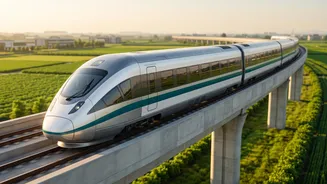
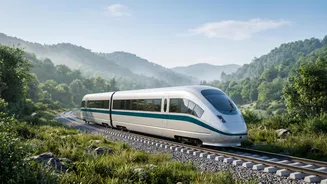
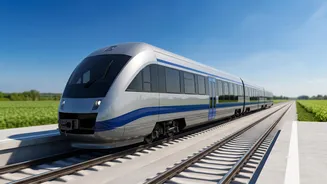
A hydrogen train is essentially an electric train that produces its own power on board. Instead of drawing electricity from overhead lines, it uses a device called a fuel cell. Inside the fuel cell, hydrogen stored in tanks on the train chemically reacts
with oxygen taken from the air. This reaction generates electricity to power the motors, and the only by-product is water vapour, making it a zero-emission mode of transport at the point of use. These trains are also equipped with batteries to store excess energy generated, which can be used for acceleration, thus improving efficiency. This technology offers a clean alternative to the diesel engines that currently operate on many routes across the country.
India's 'Hydrogen for Heritage' Initiative
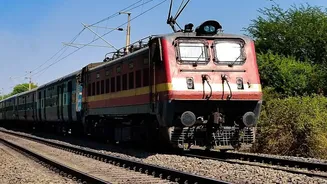
Indian Railways has launched an ambitious initiative named 'Hydrogen for Heritage'. The project aims to run 35 hydrogen-powered trains on its iconic and ecologically sensitive heritage routes. These include famous narrow-gauge lines like the Kalka-Shimla Railway, Darjeeling Himalayan Railway, and the Nilgiri Mountain Railway. The idea is to replace ageing diesel locomotives on these scenic lines, preserving their natural beauty by eliminating pollution. The first phase involves retrofitting existing Diesel Electric Multiple Unit (DEMU) trains with hydrogen fuel cell systems, an approach designed to be more cost-effective than building new trains from scratch. This initiative is a key part of the Railways' goal to become a net-zero carbon emitter by 2030 and supports India's broader National Green Hydrogen Mission.
The Jind-Sonipat Pilot Project
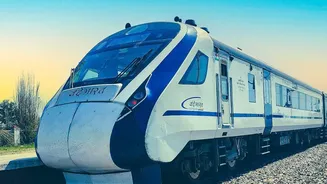
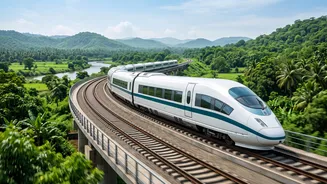
The first real-world test for this technology in India is taking place on the 89-kilometre Jind-Sonipat route in Haryana. A hydrogen-powered train was flagged off on this section on July 17, 2026, marking a significant milestone. This pilot is designed to assess the train's performance, safety, and reliability under regular operating conditions. To support the trial, an integrated hydrogen facility has been set up at Jind, which includes capabilities for hydrogen production, storage, and refuelling. While the train was designed for speeds up to 110-120 kmph, early operations have seen low passenger numbers, prompting officials to consider extending the route to Delhi to improve utilisation.
How It Slashes Carbon Emissions
The primary benefit of hydrogen trains is their environmental friendliness. Unlike diesel engines that burn fossil fuels and release carbon dioxide, soot, and other pollutants, hydrogen fuel cells produce zero harmful emissions. The only emission is water, making the air in and around stations cleaner. For a network as vast as Indian Railways, which is a significant consumer of diesel, this transition can lead to a substantial reduction in its overall carbon footprint. The plan is particularly impactful for non-electrified routes where diesel is the only option. While a vast majority of the main lines are electrified, hydrogen offers a clean solution for the remaining tracks, especially in difficult terrains and heritage sections where installing overhead electric lines is impractical or would spoil the landscape.
Challenges on the Track Ahead
Despite the promise, the journey towards a hydrogen-powered railway is filled with challenges. The most significant hurdle is cost. Both the fuel cell technology and the production of 'green' hydrogen (produced using renewable energy) are currently expensive. Creating the necessary infrastructure for hydrogen production, storage, and refuelling across the country will require substantial investment. Safety is another critical concern, as hydrogen is highly flammable and requires strict handling protocols. Furthermore, there are questions about overall energy efficiency, as energy is lost during the process of producing hydrogen and then converting it back to electricity. The success of the initial pilot projects will be crucial in determining how and when this technology can be scaled up across the network.