

The Foundation: Start with Rice
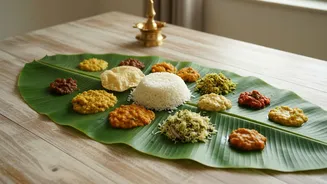
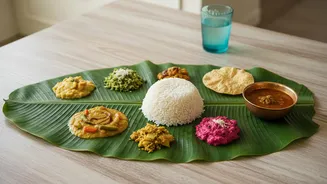
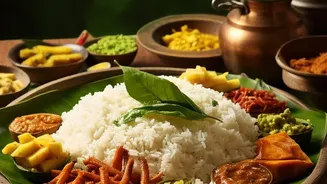
The heart of any Sadhya is the rice, traditionally Kerala's parboiled Matta rice. All other dishes are served in relation to it. A good rule of thumb is to plan for about 1 to 1.5 cups of cooked rice per person. However, since a Sadhya includes so many
other dishes, people often eat less rice than they would in a regular meal. A smart approach is to calculate your usual amount of uncooked rice for your guest count and then reduce it by about 25%. For 10 guests, where you might normally cook five cups of raw rice, planning for about four cups is a safer bet. This ensures everyone has enough while accounting for all the other delicious items on the leaf.
The Main Curries: Parippu and Sambar
Parippu, a simple moong dal curry served with ghee, is the first item mixed with rice. This is followed by Sambar, a flavorful lentil and vegetable stew. Since these are the primary liquid curries, you should be generous, but not excessive. Plan for about 150-200 ml of each curry per person. For 10 people, preparing around 1.5 to 2 litres of Sambar and about 1 to 1.5 litres of Parippu is a solid estimate. These dishes are central to the meal, so it's better to have a little extra than to run short.
The Side Dishes: Thoran, Avial, and Kootu Curry
Here's where the variety of a Sadhya truly shines. You will likely have several vegetable dishes like Thoran (a dry stir-fry with coconut), Avial (mixed vegetables in a coconut-yogurt gravy), Kalan, and Olan. With so many options, guests will only take a spoonful or two of each. For these side dishes, you don't need to cook a large quantity of any single one. A good strategy is to prepare about 1 to 1.5 cups (cooked) of each side dish for every 4-5 guests. So for a party of 10, around 2-3 cups of Avial and a similar amount for each Thoran should suffice. The goal is to offer variety, not volume.
The 'Touchings': Pickles, Pachadi and Kichadi
Dishes like Inji Puli (a sweet and tangy ginger pickle), mango pickle, Pachadi, and Kichadi (yogurt-based sides) are flavor powerhouses served in small quantities. These are meant to be 'touchings' that accent the main meal, not dishes to be eaten in large amounts. A tiny spoonful of each is all that's required per person. For 10 guests, a single cup (around 250ml) of each of these items is more than enough. Many of these, like the pickles, can be prepared days in advance and store well, reducing last-minute stress.
The Sweet Finale: Payasam
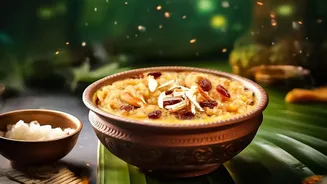
The meal concludes with Payasam, a rich, sweet dessert. By this point, your guests will be quite full. Whether you're making one or three varieties, small portions are key. A serving size of about 100-150 ml per person for each type of Payasam is plenty. For 10 guests, preparing around 1.5 litres of Payasam in total should be sufficient. Remember, these desserts are often very rich, made with jaggery, milk, or coconut milk, so a little goes a long way.
Smarter Sadhya Strategies
Beyond just portioning, a few strategies can drastically reduce waste. First, prep ingredients in advance—chop vegetables, grate coconut, and make spice mixes—but cook fresh on the day of the feast. This prevents overcooking large batches too early. Second, if guests offer to bring a dish, coordinate with them to avoid doubling up. Finally, embrace the tradition of using banana leaves as plates; they are fully biodegradable and can be composted or fed to cattle, making the entire meal more sustainable. Having a plan for leftovers, like sharing with neighbours or repurposing dishes, ensures that the spirit of abundance doesn't lead to waste.