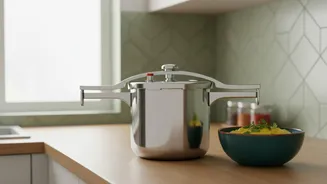







The Gasket: Your First Line of Defence
The rubber or silicone ring that sits inside the lid is called the gasket, and it's essential for creating an airtight seal. Without a proper seal, the cooker cannot build pressure correctly, leading to steam leaks and undercooked food. Before each use,
give it a quick check. Is it flexible? Or does it feel dry, brittle, or have visible cracks? Any sign of damage means it's time for a replacement. Manufacturers often suggest replacing the gasket every 12 to 18 months, regardless of visible wear, to ensure safety. After washing, make sure the gasket is clean and seated correctly in the lid before you store it.
Keep the Vents and Valves Clear
Every pressure cooker lid has a steam vent (often called a vent pipe) and at least one safety valve. The main steam vent, where the whistle or pressure regulator sits, is the primary way pressure is managed during cooking. However, small food particles from frothy dals, rice, or pasta can clog it over time. A simple way to check is to hold the lid up to the light and look through the vent. If it’s blocked, use a small pin or brush to gently clear the obstruction. The safety valve is a crucial backup, designed to release extreme pressure in an emergency. Ensure this valve is also clean and can move freely, as a blocked safety valve is a significant hazard.
Proper Use and Cleaning Habits
Maintenance isn't just about deep cleaning; it's also about daily habits. First, never overfill the cooker. A good rule is to never fill it more than two-thirds full with solids or liquids, and only halfway for foods that expand or froth, like beans and grains. Overfilling is a leading cause of blocked vents. Always use enough liquid—at least half a cup—as the cooker needs it to generate steam. After cooking, let the cooker cool down before washing it with a mild soap and a soft sponge. Abrasive scrubbers like steel wool can scratch the surface and damage the finish. Finally, check that the handles are tight and the lid locks smoothly without force.
Warning Signs You Shouldn't Ignore
Your pressure cooker will often tell you when something is wrong. Pay attention to these warning signs. If you see steam leaking from the sides of the lid during cooking, it's a clear indicator that the gasket is failing or the lid isn't sealed correctly. If the cooker takes much longer than usual to reach pressure, it could also point to a bad seal. A rattling noise might indicate that the pressure is too high, and you should reduce the heat. Other serious red flags include a damaged or bent lid, cracks in the body, or a safety valve that has activated. If a standard safety valve goes off, it must be replaced before the cooker is used again. Do not use a cooker with a misshapen or ill-fitting lid.