





A New Home in Orbit
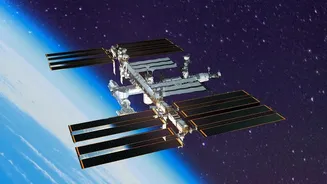
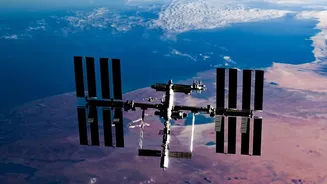
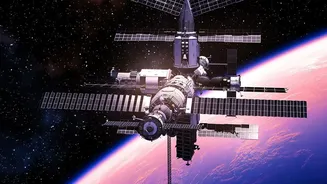
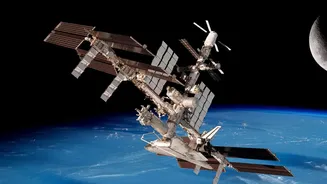
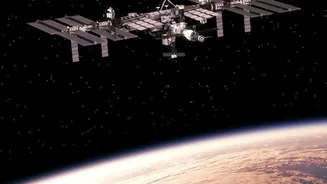
India is on a determined path to establish its own orbital outpost, the Bharatiya Antariksha Station (BAS), by 2035. This ambitious project is the next logical step after the Gaganyaan human spaceflight mission, which is developing the core capabilities
to send Indian astronauts, or 'Gaganyatris', into space. The plan is modular, starting with a foundational module, BAS-01, expected to launch by 2028. This initial component will be robotic, serving as a testbed for crucial technologies. The full, five-module station will eventually be assembled in low-Earth orbit, approximately 400-450 kilometres high, creating a sustained Indian presence in space. This isn't just about planting a flag; it's about building a versatile platform for science that can't be done on Earth.
The Power of Microgravity
The single most important feature of the space station is its environment of microgravity, or near-weightlessness. On Earth, gravity influences everything, from how fluids mix to how cells grow and how materials solidify. By removing gravity from the equation, scientists can observe and manipulate biological and physical processes in their fundamental state. This unique setting allows for experiments that are impossible to conduct on the ground. Researchers can study changes to the human body, grow purer crystals, create new metal alloys, and observe combustion in ways that gravity normally masks. The BAS will provide Indian scientists with dedicated, long-term access to this extraordinary laboratory.
Breakthroughs in Medicine and Health
Some of the most profound research will be in biology and medicine. Long-duration spaceflight reveals how the human body adapts to microgravity, including muscle atrophy and bone density loss—conditions that mirror diseases like muscular dystrophy and osteoporosis on Earth. By studying these effects in astronauts, and conducting experiments on muscle stem cells, scientists can gain invaluable insights into disease mechanisms and develop new therapies. Another key area is drug development. In microgravity, proteins can form larger, more perfect crystals, which allows researchers to map their structure more accurately. This knowledge is crucial for designing highly effective drugs to combat a range of illnesses. The station will be a hub for this kind of high-impact biomedical research.
Innovations in Materials Science
The station will also be a furnace for creating the materials of the future. In the absence of gravity-driven convection and sedimentation, molten metals can be mixed more uniformly to create novel alloys with unique properties. Similarly, crystals used in advanced electronics and pharmaceuticals can be grown with a level of purity and perfection unattainable on Earth. This opens up possibilities for manufacturing specialized components, from high-performance semiconductors to next-generation optical fibres. The BAS will serve as a testbed for space-based manufacturing techniques that could eventually lead to new industries.
A Vantage Point for Earth and Beyond
Orbiting the Earth every 90 minutes provides a unique and constant vantage point. The Bharatiya Antariksha Station will be equipped with advanced instruments for Earth observation, enhancing India's ability to monitor climate change, track weather patterns, and aid in disaster management. Beyond looking down at our own planet, the station is a crucial stepping stone for deeper space exploration. It will allow ISRO to test and master technologies essential for long-duration missions, such as life support systems, in-orbit refuelling, and spacecraft docking. These are the very capabilities required for India's long-term goals of sending astronauts to the Moon. The station is both a destination and a launchpad for future ambitions.