



The Purpose of the Twist
Before we modify, it's helpful to understand why we do this exercise. The standing torso twist is designed to strengthen your core muscles, particularly the obliques, which run along the sides of your waist. It also improves spinal mobility, helping to counteract
the effects of prolonged sitting and reduce stiffness in the back. When performed correctly, it’s a low-impact move that boosts stability, posture, and balance. The goal is to create a controlled rotation through the upper and mid-back, not to generate force from the lower back or arms.
Common Mistakes That Cause Discomfort
Discomfort during a torso twist often stems from a few common errors. Many people use momentum, swinging their arms and body instead of using controlled muscle engagement. This not only reduces the exercise's effectiveness but also puts undue stress on the lower back. Another frequent mistake is twisting from the lumbar (lower) spine instead of the thoracic (mid-to-upper) spine. The lumbar spine is designed for stability, not extensive rotation. Forcing it to twist can lead to strain and pain. Finally, keeping the hips and legs completely rigid or, conversely, letting them swing wildly can also cause issues. The movement should be initiated and controlled by your core.
Foundational Foot and Hip Position
Your setup is the first step to a comfortable twist. Stand with your feet shoulder-width apart and your knees slightly bent—never locked. This 'soft knee' position creates a stable base and protects your joints. Imagine your hips as headlights that should remain facing forward as much as possible, especially when you are starting out. While some variations involve pivoting the feet, mastering the static-hip version first helps you learn to isolate the torso rotation. This ensures the twist comes from your core and thoracic spine, not from your hips or lower back.
Initiate the Twist from Your Core
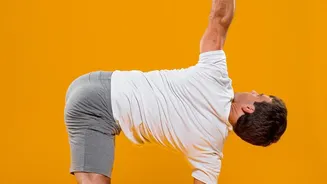
The power of the twist should come from your abdominal muscles. Before you move, engage your core by gently drawing your navel toward your spine. Place your arms across your chest or bend them with your hands near your shoulders. As you exhale, slowly begin to rotate your upper body to one side. Think of your ribs rotating around your spine. Your head and shoulders should follow the movement naturally. The motion should be slow and deliberate, not a rapid jerk. By focusing on this core engagement, you prevent your arms from simply swinging and ensure your muscles are doing the work.
Finding Your Pain-Free Range of Motion
This is the most crucial adjustment. Your range of motion is not about how far you can twist, but how far you can twist with good form and without pain. Begin with a very small rotation, perhaps just a few inches to each side. Notice how your back and obliques feel. Is there any pinching or sharp pain? If so, reduce the range even further until the movement is completely comfortable. It is far more effective to perform a small, controlled twist correctly than a large, sloppy one. Over time, as your muscles strengthen and your mobility improves, you can gradually increase this range. The key is to listen to your body and never push through joint pain.
The Role of a Controlled Return
The way you return to the center is just as important as the twist itself. Avoid the temptation to quickly spring back to the starting position. Instead, maintain core engagement and control the movement as you slowly rotate back to the front. This controlled return, known as the eccentric phase, is vital for building strength and stability. Inhale as you return to the center, and exhale as you begin the twist to the opposite side. This mindful breathing and controlled motion will maximize the benefits and significantly reduce the risk of strain.