


The Sun's Inevitable Decline
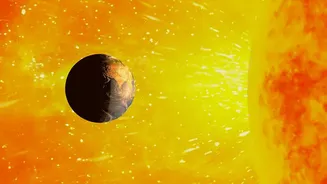
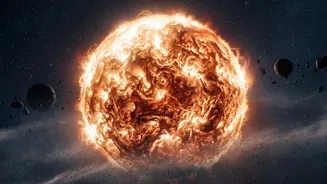
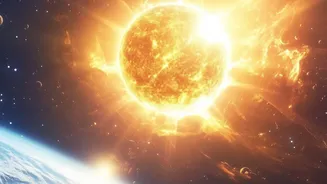
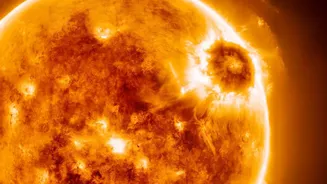
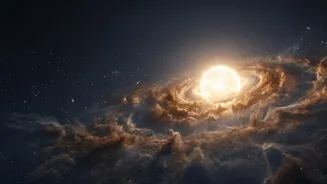
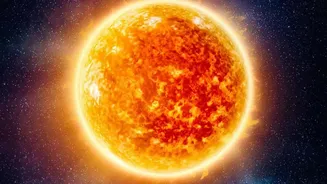
Like all stars of its kind, our Sun has a finite lifespan. It is currently in its main sequence phase, steadily fusing hydrogen into helium. But in roughly five billion years, that hydrogen fuel will run out. The Sun will then swell into a red giant,
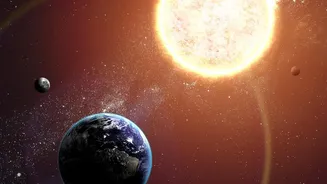
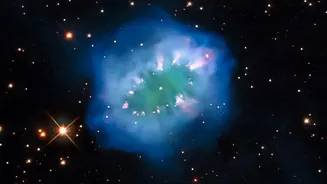
its outer layers expanding catastrophically. In this phase, it will become hundreds of times larger and thousands of times brighter, engulfing the innermost planets, Mercury and Venus. Earth's own fate hangs in the balance, with some models suggesting it will be vaporised and others that it might just survive. After shedding its outer layers as a beautiful planetary nebula, all that will remain of our star is a hot, dense core called a white dwarf—an Earth-sized ember containing about half the Sun's original mass.
A Gravitational Unraveling
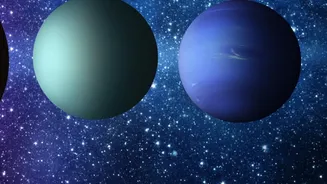
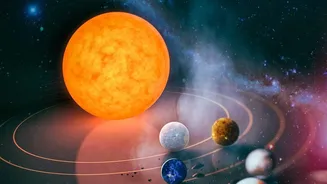
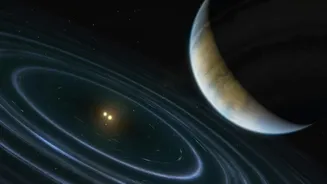
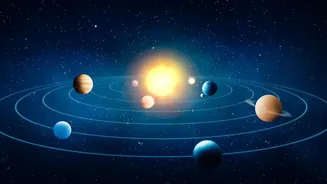
The death of the Sun doesn't just mean the lights go out; it fundamentally rewrites the rules of gravity for the entire system. As the Sun ejects nearly half its mass, its gravitational pull on the surviving planets will weaken significantly. This causes the orbits of the outer planets—Jupiter, Saturn, Uranus, and Neptune—to expand, pushing them further away from the stellar remnant. For a long time, scientists believed this would lead to a larger, but still stable, version of our solar system that could persist for billions or even trillions of years. However, recent studies suggest a much more chaotic and faster unraveling.
From Order to Chaos
New simulations published in late 2026 paint a more violent picture. These models suggest that the Sun won't lose mass smoothly but in lopsided, discrete bursts. Each burst will deliver a small 'kick' to the dying star, and the cumulative effect of these kicks will jolt the planets. This process dramatically shortens the solar system's lifespan. Instead of lasting for quintillions of years, the outer planets' stable arrangement could break down in as little as one billion years after the Sun becomes a white dwarf. These gravitational nudges can throw the giant planets into unstable configurations, leading to orbits crossing, planets swapping places, or even being ejected from the solar system entirely. Isaac Newton once suspected the planets' own gravity would lead to instability; it turns out the Sun itself will likely be the main culprit.
A Glimpse into Planetary Graveyards
This is where the destruction becomes a powerful tool for discovery. Astronomers can't watch our own solar system's demise, but they can observe white dwarfs across the galaxy. Many of these dead stars have atmospheres 'polluted' with heavy elements like iron and magnesium, which shouldn't be there. These elements are the remnants of asteroids, dwarf planets, or even larger planets that were gravitationally disturbed and torn apart by the white dwarf. By analysing the light from these polluted white dwarfs, scientists can perform a kind of stellar autopsy, determining the chemical makeup of the shredded worlds. This provides an unprecedented window into the composition of rocky bodies outside our solar system.
What We Learn from the Debris
Studying this planetary debris tells us about the geology of alien worlds. For instance, the presence of certain elements reveals that many of the destroyed bodies were differentiated, meaning they had melted to form metallic cores and rocky mantles, much like Earth. This suggests that the building blocks of planets in other systems are not so different from our own. By observing the chaos around these dying suns—seeing which planets survive, how their orbits change, and what happens to the smaller rocky bodies—scientists are essentially watching previews of our own solar system's deep future. Each polluted white dwarf is a clue in the grand puzzle of how planetary systems form, evolve, and ultimately, come apart.