






The 'Out of Sight, Out of Mind' Problem
How often have you reached the end of the day only to realise you've barely had a few sips of water? It's a common oversight. Our brains are wired for efficiency, constantly filtering out non-urgent information to focus on the task at hand. Thirst is an important
signal, but it's often a delayed one; by the time you feel thirsty, you may already be mildly dehydrated. The core issue is that for many of us, drinking water is not an automatic habit. Instead, it’s a conscious choice that has to compete with dozens of other choices throughout the day. When your water bottle is tucked away in a bag or left in the kitchen, it simply doesn't exist in your immediate mental landscape.
Your Brain on Autopilot
Much of our daily behaviour is driven by habits that operate on a simple loop: cue, routine, reward. A notification sound (cue) prompts you to check your phone (routine) for a new message (reward). Your environment is filled with these cues that trigger automatic actions without you even thinking about them. A visible water bottle acts as a powerful visual cue. Every time your eyes land on it, your brain receives a micro-reminder: 'Oh right, take a sip'. This simple, repeated action slowly rewires your behaviour. The more you respond to the cue, the stronger the neural pathway becomes, until reaching for your bottle becomes as effortless as any other habit. You are essentially designing your environment to do the hard work for you, bypassing the need for constant willpower.
Designing for Hydration
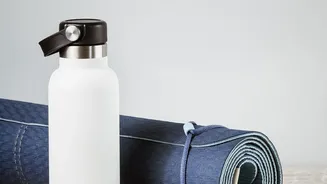
The principle of using visual cues is a cornerstone of behavioural science, sometimes called 'environmental design' or 'choice architecture'. The idea is to make good choices the easiest and most obvious ones. By placing a water bottle in your direct line of sight—on your desk, on the passenger seat of your car, on your bedside table—you are creating a 'hydration-friendly environment'. You are removing the friction that prevents you from drinking. Instead of having to remember, get up, and find a glass, the opportunity is right there, demanding almost no effort. This strategy is far more effective than relying on memory or setting alarms, which can easily be ignored. A physical, visible object is a persistent and gentle nudge that integrates seamlessly into your day.
Making the Habit Stick
To maximise this effect, choose a reusable bottle you enjoy using. A bottle with a striking colour or design can be an even more effective visual anchor. The 'reusable' aspect is also crucial, not just for the environment but for your health. Studies have shown that single-use plastic bottles can leach thousands of microplastic and nanoplastic particles into the water, which can then accumulate in the body. By opting for a high-quality reusable bottle, you avoid this risk. For the habit to truly form, consistency is key. Try 'habit stacking': link drinking water to an existing daily habit. For example, take a few sips every time you sit down at your desk or every time you stand up for a break. This connects the new behaviour to an established routine, making it more likely to become automatic.
The Rewards of Staying Hydrated
The benefits of this simple habit extend far beyond just quenching thirst. Proper hydration is critical for nearly every bodily function. It helps regulate body temperature, lubricates joints, and aids in flushing out waste. Even mild dehydration can lead to fatigue, reduced concentration, mood changes, and headaches. Staying consistently hydrated can boost your energy levels, improve skin health, support digestion, and may even help prevent issues like kidney stones. By keeping that bottle visible, you’re not just drinking more water; you're investing in clearer thinking, better physical performance, and overall long-term health.