

Choose Your Lentils Wisely
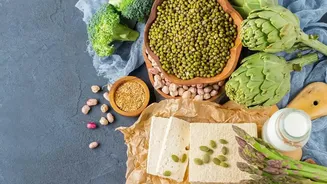
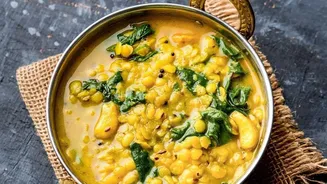
The secret to a thick dal often begins with the type of lentil you choose. While all dals are nutritious, some have a natural tendency to break down and create a creamy consistency. Red lentils (masoor dal) and yellow split moong dal are excellent choices
as they cook quickly and dissolve into a thick, soupy texture. For an even richer and more complex protein profile, try mixing different types of lentils. Combining a creamy lentil like masoor with a firmer one like toor (arhar) or chana dal adds both thickness and a variety of textures. This 'panchmel' or five-lentil approach is a traditional method for creating a dal that is not only thick but also incredibly nutrient-dense.
Incorporate Creamy Vegetables
One of the easiest and healthiest ways to thicken dal is to let vegetables do the work for you. Certain vegetables, when cooked down, release their starches and blend seamlessly into the lentils. Pumpkin, sweet potato, carrots, and bottle gourd (lauki) are fantastic additions. Simply chop them into small pieces and add them to the pressure cooker along with your lentils. As they cook, they will soften and partially disintegrate, adding body, a hint of sweetness, and a significant boost of vitamins and fibre to the final dish. For a quicker method, you can grate the vegetables before adding them to ensure they melt completely into the dal.
The Power of Partial Mashing
This technique is simple, effective, and requires no extra ingredients. Once your dal is cooked and soft, use the back of your ladle or a whisk to gently mash about a quarter of the lentils against the side of the pot. This action breaks down some of the cooked lentils, releasing their natural starches and instantly thickening the entire dish. You can also use an immersion blender for a few seconds, but be careful not to overdo it—you want to retain some texture, not turn the whole pot into a uniform puree. This method works especially well for dals made with firmer lentils like chana or whole moong that don't fall apart completely on their own.
Add a Handful of Grains
For a significant boost in both thickness and protein, consider adding a small amount of grains to your dal while it cooks. A tablespoon or two of rolled oats or quinoa can work wonders. Oats cook down to become completely unnoticeable in texture but add a wonderful creaminess. Quinoa, another protein powerhouse, will add a subtle texture while also contributing to a thicker consistency. Broken wheat (dalia) is another traditional option that makes the dal heartier and more of a one-pot meal. This is a great hack for making your dal more filling and nutritionally complete, especially on busy weeknights.
Boost with Nuts and Seeds
To add richness, healthy fats, and a protein boost all at once, turn to nuts and seeds. A spoonful of peanut, cashew, or sesame seed paste can be stirred into the dal towards the end of cooking to add incredible creaminess and flavour. If you don't have a paste, you can make your own by grinding a small handful of nuts with a little water. This is a common technique in regional Indian cuisines to create luxurious, rich gravies. Not only does this thicken the dal, but it also enhances its protein content, making it a more complete and satisfying dish.
Slow Simmer for Success
Sometimes, the simplest solution is time. If you've finished cooking your dal and it still seems a bit thinner than you'd like, don't rush to serve it. Allow it to simmer gently on low heat with the lid partially off for another 10 to 15 minutes. This allows excess water to evaporate, concentrating the flavours and naturally thickening the consistency. This step also gives the spices more time to meld together, resulting in a deeper, more rounded flavour. Remember that dal will always thicken as it cools, so aim for a consistency that is slightly thinner than your desired final result.