



The Stratosphere: A High-Altitude Desert
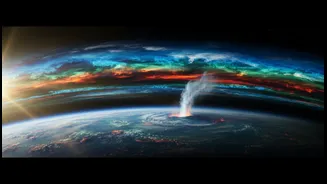
High above the weather we experience daily lies the stratosphere, a layer of the atmosphere extending from about 10 to 50 kilometers above Earth's surface. This region is critical, containing the ozone layer that protects us from harmful ultraviolet radiation.
The stratosphere is also incredibly dry. The boundary below it, the tropopause, acts as a natural cold trap, freeze-drying most air that rises from the moist lower atmosphere. Traditionally, the small amount of water vapor that does get through, along with the oxidation of methane, was thought to be the primary source of stratospheric moisture. However, recent findings are challenging this long-held view, pointing to powerful and dramatic events on Earth's surface as significant contributors.
When Fire Creates Its Own Weather
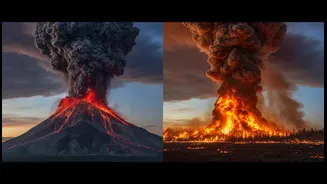
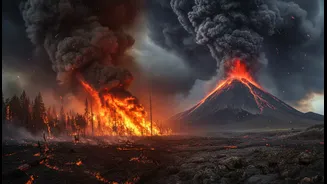
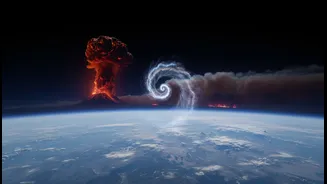
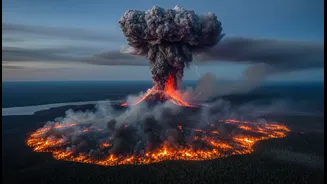
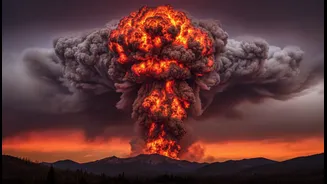
Intense wildfires can become so powerful that they generate their own weather systems. These fire-driven thunderstorms, known as pyrocumulonimbus (pyroCb) clouds, act like massive chimneys. The extreme heat from the fire forces a huge column of air, smoke, and moisture—sucked from the air and vaporized from vegetation—rapidly upward. This column can be strong enough to punch right through the tropopause, directly injecting smoke and a significant amount of water vapor into the cold, dry stratosphere. Previously underappreciated, this mechanism is now understood to be a key pathway for terrestrial events to influence the upper atmosphere. Studies show that a single major wildfire event can inject a mass of particles into the stratosphere comparable to a moderate volcanic eruption.
Volcanoes: Nature’s Super-Injectors
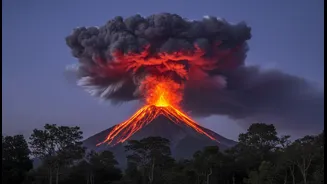
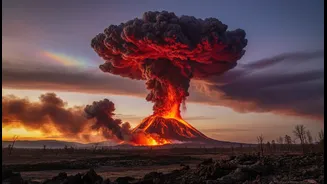
Volcanic eruptions have long been known to affect the stratosphere, primarily by injecting sulfur dioxide that forms sunlight-reflecting aerosols. But their role in transporting water has been brought into sharp focus by the 2022 eruption of the Hunga Tonga-Hunga Ha'apai underwater volcano. This eruption was unprecedented in the modern satellite era, blasting an estimated 146-150 million metric tons of water vapor—equivalent to about 10% of the entire stratosphere's water content—deep into the upper atmosphere. The water vapor reached altitudes of over 56 kilometers. While many eruptions are sulfur-rich, Hunga's shallow underwater location allowed it to vaporize a colossal amount of seawater and shoot it skyward, providing dramatic proof of this powerful injection mechanism.
A Wetter Stratosphere and Its Consequences
So, what does a wetter stratosphere mean for us on the ground? Water vapor is a potent greenhouse gas. While the effects are complex and still being studied, adding more of it to the stratosphere can trap heat and contribute to surface warming. It can also alter atmospheric chemistry. Increased water vapor can enhance chemical reactions that destroy ozone, potentially delaying the recovery of the ozone layer. The combined effect of moderate volcanic eruptions and extreme wildfires from 2005 to 2021 is estimated to have contributed significantly to the observed increase in stratospheric water vapor over that period. While the warming from these events is not on the same scale as that from long-term CO2 emissions, it represents a crucial and previously overlooked variable in our climate system.