




The Monsoon’s Official Welcome
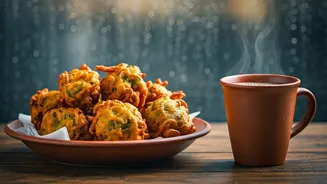
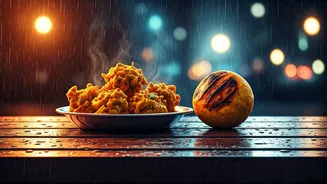
It’s a ritual understood without words. The sky darkens, the first rumble of thunder echoes in the distance, and someone in the household inevitably says, “Shall I make some pakoras?” It’s not just a question about food; it’s an announcement that the season
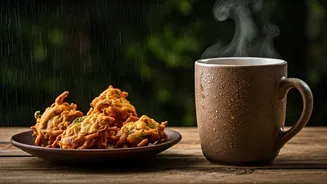
has truly turned. The scorching heat of summer is finally breaking, and the relief that washes over the land is best celebrated with a plate of something hot, crispy, and deeply comforting. In kitchens across India, the sizzle of batter hitting hot oil becomes the official soundtrack of the monsoon’s arrival, a sensory welcome mat for the season of grey skies and green landscapes.
A Perfect Culinary Partnership
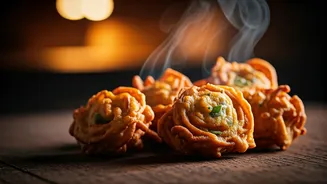
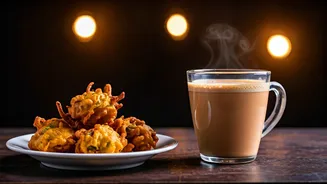
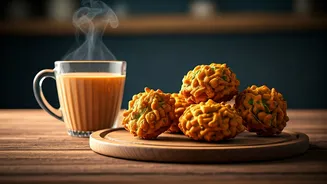
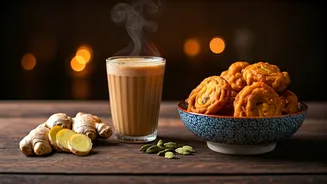
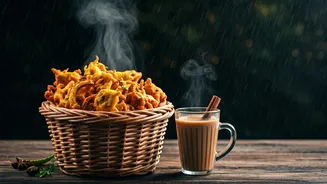
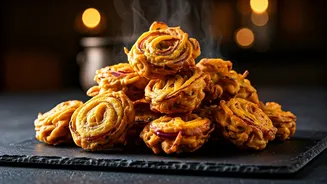
Why this specific pairing? It’s a match perfected over generations, a study in complementary contrasts. The pakora, in all its glorious forms—be it the sharp bite of an onion bhaji, the softness of a potato slice, or the earthiness of a spinach fritter—offers a savoury, spicy crunch. It’s a burst of flavour and texture. Following that with a sip of hot, milky, and often sweet or spiced chai is a culinary masterstroke. The warmth of the tea cuts through the oiliness of the fritter, cleansing the palate and preparing it for the next bite. The astringency of the tea tannins balances the richness of the deep-fried snack, while the spices in a masala chai create a complex dance with the gram flour and seasonings of the pakora. One without the other on a rainy day feels incomplete, like a song missing its chorus.
More Than a Snack, It’s a Social Glue
The magic of chai and pakoras extends far beyond the plate. This pairing is an excuse to pause, gather, and connect. When the rain forces everyone indoors, a shared platter of pakoras and steaming cups of tea can turn a gloomy afternoon into a cherished memory. It’s the fuel for long conversations, family gossip sessions, and impromptu get-togethers with neighbours. Office workers huddle around a nearby stall, shielding their tea from the downpour. Families crowd onto verandahs, watching the rain while munching away. This combination doesn't just feed the body; it nourishes a sense of community and togetherness. It’s a simple, accessible luxury that encourages us to slow down and enjoy the moment, a welcome respite from the rush of modern life.
A Deliciously Diverse Tradition
While the concept is universal across India, the execution is beautifully diverse. In the north, you might find paneer pakoras or gobi pakoras, dense and satisfying. Travel to the west, and the onion bhaji or 'kanda bhaji' reigns supreme, often accompanied by a fiery green chutney. In the south, fritters might be made with rice flour or different lentils, offering a unique crispness. Even the chai changes its character from region to region. Whether it’s the strong, ginger-infused 'adrak wali chai' popular in many households or the fragrant, cardamom-scented 'elaichi chai', the principle remains the same. Each family, each street-side vendor, has their own secret twist—a pinch of ajwain (carom seeds) in the batter, a special masala blend for the tea—making every experience both familiar and unique.
The Simple Science of Comfort
There’s also a scientific reason behind this universal craving. The drop in temperature during the monsoon makes our bodies seek warmth, and hot beverages and foods provide that internal heat. Furthermore, grey, overcast days can lead to a slight dip in serotonin levels, the 'feel-good' neurotransmitter. Carbohydrate-rich and fatty foods, like pakoras, can help give our mood a temporary boost. The combination of heat, fat, and carbs is a potent formula for comfort. It triggers pleasure centres in the brain, providing a sense of satisfaction and well-being that is particularly welcome when the weather outside is dreary. It’s not just in your head; your body genuinely craves this comforting combination.