



A Major Vote of Confidence
On October 20, 2026, Eka Robotics announced the closing of a $150 million Series A funding round. This significant financial injection was co-led by prominent venture capital firms Andreessen Horowitz (often known as a16z) and F-Prime. A Series A round is a company's
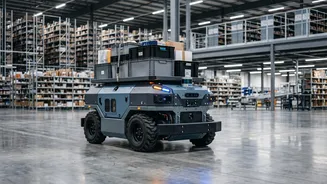
first major infusion of venture capital, and a deal of this size represents a powerful vote of confidence from investors in Eka's vision and technology. The round, which brought the company's valuation to an impressive $1.45 billion, also saw participation from previous seed investors and other strategic partners like Samsung Next. This funding isn't just a number; it's the fuel that will allow Eka to scale its technology and accelerate the deployment of its advanced robots into real-world industrial settings.
Beyond the Assembly Line
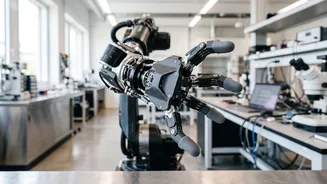
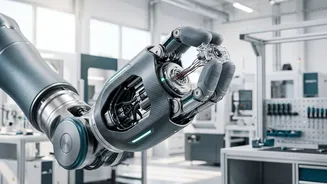
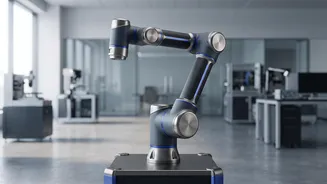
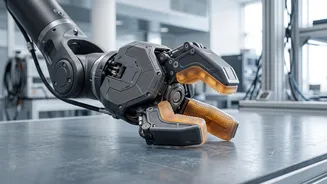
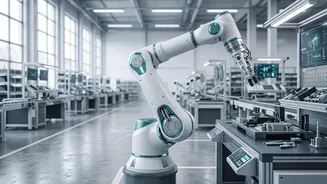
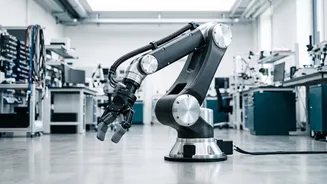
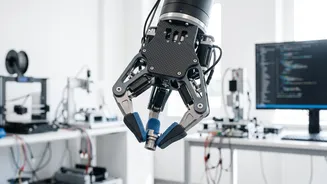
So, what makes Eka Robotics different from the industrial robots we're used to seeing on car assembly lines? The answer lies in dexterity and intelligence. Founded in 2024 by an MIT professor and a former Google DeepMind researcher, Eka's mission is to solve one of the toughest challenges in robotics: creating machines that can handle complex physical work with nuance and adaptability. Instead of just programming a robot to perform a single, repetitive motion, Eka is developing what it calls a 'Vision-Force-Action' (VFA) model. This AI-driven system combines computer vision with advanced force-sensitive grippers, allowing the robot to not only 'see' an object but also 'feel' it. This tactile feedback is crucial, enabling the robot to judge pressure and adjust its grip in real-time, much like a human does.
The Next Frontier: Physical Intelligence
The new funding is earmarked for research into robots that can perform a wider range of physical tasks. Think beyond simply picking and placing an object. Eka's robots have already demonstrated the ability to screw in a lightbulb, handle delicate wires, and pick up fragile items like berries without crushing them. They can reportedly pick around 1,500 objects per hour, more than double the rate of a human worker, with over 95% accuracy. The company achieves this by training its AI models in physics-based simulations, generating thousands of hours of experience in minutes. This allows the robots to develop an 'intuition' for physics, helping them handle objects and situations they haven't encountered before. The goal is to bridge the gap between 'generality' (being able to do many different things) and 'performance' (doing them well and quickly), a major hurdle that has kept advanced robots in the lab and out of the real world.
What This Means for India
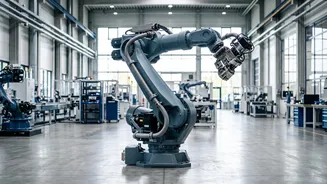
Eka's success is part of a larger trend. India is one of the fastest-growing markets for automation globally, ranking among the top ten countries for annual industrial robot installations. In 2025, the country installed nearly 10,500 new industrial robots, a 15% increase from the previous year, with the automotive sector leading the charge. However, India's overall 'robot density'—the number of robots per 10,000 manufacturing workers—remains low compared to global leaders, indicating a massive potential for growth. Government initiatives like 'Make in India' are encouraging manufacturers to adopt advanced technologies to boost productivity and quality. Companies like Eka are at the forefront of this wave, developing the kind of sophisticated automation that could transform industries from logistics and electronics to food production and healthcare.