






From Splashdown to Science
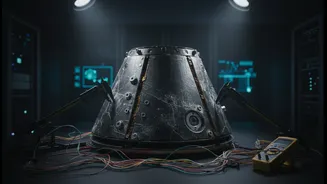
After successfully circling the Moon and returning to Earth, the four astronauts of Artemis II splashed down safely in the Pacific Ocean. But for the Orion spacecraft, the mission was far from over. Upon recovery, the capsule was immediately transformed
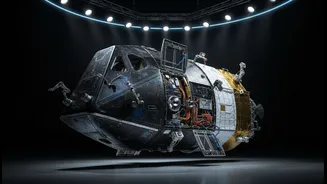
from a transport vehicle into a priceless scientific artifact. Now back at NASA's Kennedy Space Center, it is undergoing an exhaustive teardown and analysis. Every component, from its scorched heat shield to its life support systems, is being scrutinised. This forensic examination isn't just about verifying success; it's about gathering terabytes of data that will make future missions, including those of international partners, safer and more efficient. For India and its Gaganyaan mission, these findings are a goldmine of information.
Lessons from a Fiery Re-entry
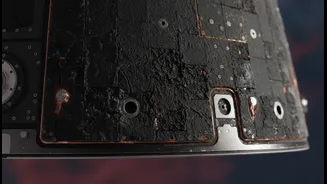
One of the most critical phases of any human spaceflight is returning to Earth. The Orion capsule entered the atmosphere at speeds approaching 35 times the speed of sound, generating immense heat. A key focus of the post-flight check is the performance of its thermal protection system, or heat shield. Engineers are studying the char loss and ablation patterns to validate their models. For India's Gaganyaan, which will also face the perilous re-entry phase, this data is invaluable. Understanding how Orion's shield withstood the inferno provides a real-world benchmark for ISRO's own heat shield design, which has been validated in experiments but not yet on a full orbital return. Any unexpected wear or performance deviation on Orion offers a free lesson for ISRO, allowing it to refine its own re-entry systems and safety protocols without bearing the risk of a first flight.
A Blueprint for Life in a Can
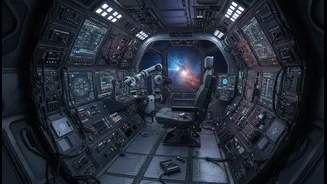
Keeping astronauts alive and healthy in the harsh environment of space is the single most important challenge. The Artemis II mission was the first real-world test of Orion's advanced environmental control and life support systems (ECLSS) with a human crew. These systems regulate everything from air pressure and temperature to oxygen levels and waste management. While the mission was a success, in-flight anomalies, such as a clogged waste vent line and a faulty smoke detector, provided crucial learning moments. The post-flight analysis will delve into why these issues occurred. For ISRO, which is in the process of fabricating and testing the ECLSS for Gaganyaan, these insights are critical. NASA's experience helps identify potential failure points and operational workarounds, directly informing the design and reliability of the life support systems that will protect India's first Vyomanauts.
The Spirit of Collaboration
While ISRO is developing Gaganyaan indigenously, the spirit of global space exploration is increasingly collaborative. India is a signatory to the Artemis Accords, a US-led framework for cooperation in lunar exploration. This partnership provides access to shared scientific data, mission planning best practices, and standardised protocols that directly benefit Gaganyaan. The success of Artemis II gives a boost of confidence to India, as it aims to demonstrate many of the same capabilities. Furthermore, NASA and ISRO have a strong history of working together on projects like the NISAR satellite mission. This established relationship, combined with the shared knowledge from the Artemis program, creates a supportive ecosystem. The lessons learned from Orion's flight and post-mission analysis will filter through this collaborative framework, helping ISRO anticipate challenges and accelerate its own human spaceflight timeline.