






The Compelling Cost Advantage
The most significant argument for choosing a bus over a plane for short-haul journeys is the price. While flight prices can fluctuate wildly based on demand and how far in advance you book, bus fares remain relatively stable and significantly lower. For
example, during peak festive seasons, a flight on a popular route like Mumbai to Pune or Delhi to Jaipur can cost several thousand rupees, sometimes doubling or tripling from its usual price. In contrast, a premium air-conditioned bus ticket for the same route offers a comfortable journey for a fraction of that cost. When you factor in the additional expenses associated with air travel—such as transport to and from airports often located far from the city centre, expensive airport food, and potential excess baggage fees—the savings from taking a bus become even more substantial.
Recalculating Total Travel Time
A one-hour flight might seem much faster than a five-hour bus ride, but the calculation is more complex. Total travel time for a flight includes the journey to the airport, arriving two hours early for check-in and security, the flight itself, and then deplaning, collecting baggage, and travelling from the destination airport into the city. For short distances, this entire process can easily take four to five hours, making it comparable to the bus journey. Bus stations are often more centrally located, and you only need to arrive a few minutes before departure. This makes the door-to-door travel time surprisingly competitive, without the stress and long queues of the airport experience.
A New Generation of On-Road Comfort
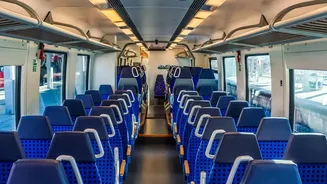
Gone are the days of cramped, rickety buses. The Indian intercity bus market has transformed, especially with the rise of private operators offering luxury services. Today’s premium coaches, including Volvo and other high-end models, are designed for comfort on long journeys. They feature reclining or sleeper berths, ample legroom, powerful air conditioning, and a smooth ride thanks to advanced suspension systems. Many buses now come equipped with modern amenities like individual charging ports, Wi-Fi, reading lamps, and entertainment systems, turning travel time into productive work time or a chance to relax and watch a movie.
The Journey Itself Becomes an Experience
Bus travel offers a different perspective on the journey. Instead of the detached experience of flying, road travel allows you to witness the changing landscapes, from bustling city outskirts to serene countryside. It’s a more grounded way to travel, connecting you with the places you pass through. Furthermore, the flexibility is a major plus. With numerous operators on popular routes, you can often find a bus departing at almost any hour of the day or night, which is ideal for spontaneous trips. This level of frequency is something airlines can rarely match on short-haul routes.
A More Environmentally Conscious Choice
For the eco-conscious traveller, the bus is a clear winner. On a per-passenger basis, bus travel has a significantly lower carbon footprint than flying, especially on short-haul routes where planes are least efficient due to the high fuel consumption during takeoff and landing. Studies have shown that a coach bus can emit less than half the carbon dioxide per passenger mile compared to a domestic flight. By choosing the bus, you're not only saving money but also making a more sustainable travel decision.