






A Symphony of Colour and Sound
To witness a Ladakhi masked dance, or Cham, is to be plunged into a world of overwhelming sensory detail. Held annually at monasteries like Hemis, Thiksey, and Matho, these festivals transform quiet spiritual centres into vibrant theatres of faith. The
courtyard becomes a stage, encircled by locals in their finest traditional dress and wide-eyed visitors. The slow, rhythmic beat of drums and the clash of cymbals set the pace. Dancers, who are specially trained monks, move with deliberate, meditative steps. Their heavy costumes, layered with rich silks and intricate brocades, swirl around them, creating a kaleidoscope of colour against the stark, majestic backdrop of the Himalayas. It’s not a performance in the Western sense; it is a ritual, a profound act of spiritual communication unfolding in real-time.
The Meaning Behind the Masks
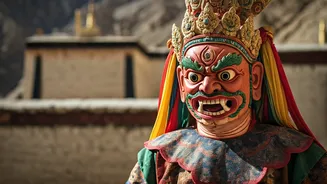
The heart of the Cham dance lies in its extraordinary masks. These are not mere decorations but sacred objects, believed to be vessels for the deities they represent. Each mask is a masterpiece of craftsmanship, carved from wood or made from papier-mâché and painted in vivid detail. They depict a vast pantheon of characters from Tibetan Buddhist cosmology. You will see wrathful protector deities (Dharmapalas) with bared fangs and third eyes, designed to subdue demons and conquer negative emotions like anger and ignorance. Others represent compassionate Bodhisattvas, historical figures like Guru Padmasambhava, and even skeletal figures (Chitipati) who act as jesters while reminding onlookers of the impermanence of life. Watching the dance, you are seeing a story of good versus evil, a visual sermon on the path to enlightenment.
A Living, Breathing Tradition
Cham is far more than a tourist attraction; it is the spiritual bedrock of Ladakhi society. The dances are performed during Tsechus, religious festivals marking important dates in the Buddhist calendar, most famously the birthday of Guru Padmasambhava, who is credited with bringing Buddhism to Tibet. The purpose of the dance is multi-layered. It is believed to ward off evil spirits, bless the land and its people, and impart moral teachings to the audience. For the monks, performing the dance is a form of meditation, requiring intense concentration and physical stamina to connect with the divine energies of the deity they are embodying. For the lay community, attending the festival is an act of devotion, a chance to accumulate spiritual merit and reconnect with their faith and neighbours.
Planning Your Journey into the Myth
Different monasteries hold their festivals at different times of the year, offering a window into this tradition for much of the tourist season and beyond. The most famous is the Hemis Tsechu, which takes place in the summer (usually June or July) and attracts enormous crowds. It celebrates the birth of Guru Padmasambhava with two days of spectacular dances. Other significant festivals include the Stok Guru Tsechu and Matho Nagrang in the winter months (February or March), which are known for their oracles and more intense, dramatic rituals performed in the biting cold. Each festival has its own unique character, but all share the same core of devotion, drama, and deep cultural resonance. To attend one is to step out of time and witness a tradition that has been passed down, unchanged in its essence, for centuries.