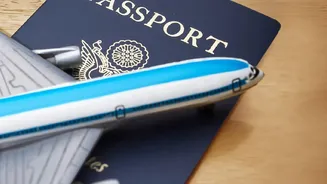









The Golden Rule of Travel Bookings
The fundamental rule for any travel booking, whether it's a flight, hotel, or train, is that the name on the ticket or reservation must match the name on the government-issued photo identification you present at check-in. For international travel, this
means your passport. For domestic travel in India, this could be your Aadhaar card, driver's licence, or passport. Airlines and hotels are strict about this policy primarily for security reasons. It ensures that the person who booked the travel is the person who is actually travelling, which is a key part of security protocols like the TSA's Secure Flight program. A mismatch can lead to delays, additional fees, or even being denied boarding or check-in.
Why 'Non-Refundable' Means No Second Chances
With a regular booking, you might have some flexibility to cancel and rebook. With a non-refundable ticket, however, the stakes are much higher. These tickets are cheaper precisely because they are non-transferable and offer limited flexibility. Airlines and hotels enforce the name-match rule rigidly on these bookings because allowing name changes could create a secondary market where people resell discounted tickets, which is against their policy. If your name on a non-refundable ticket doesn’t match your ID, you typically cannot simply transfer it to the correct name. You may be forced to cancel the booking, lose your money, and purchase a new ticket at the current, likely much higher, price.
Common Mistakes and How to Avoid Them
Name mismatches often happen due to simple, avoidable errors. Common mistakes include typos, using a nickname instead of your full legal name, reversing your first and last names, or issues arising from a recent name change after marriage. Some booking platforms may auto-fill your name from a user profile, which might not be your full legal name. The best way to avoid this is to be meticulous during the booking process. Always double-check every letter of your name against your official ID before confirming payment. Be especially careful with middle names or initials; the safest bet is to enter your name exactly as it appears in the machine-readable zone (MRZ) at the bottom of your passport's identity page.
Spotted a Mistake? Here’s What to Do
If you do notice an error after booking, act fast. India's Directorate General of Civil Aviation (DGCA) has rules that can help. Passengers are often allowed to make corrections to their name without an additional charge if they report the error within 24-48 hours of booking directly on an airline's website. This is a 'correction' for a typo, not a 'change' to a different person. If you booked through a travel agent, you must contact them for the correction. Beyond this initial window, airlines may charge a fee for corrections, and some may not allow them at all, especially close to the departure date. For hotels, it's best to contact the property or booking platform directly as soon as you notice an issue. Waiting until you arrive at the airport or hotel lobby is a risky strategy that can end in disappointment.
The Final Checkpoint: ID vs. Booking
The 'final ID match' happens at the airport check-in counter, the security check, the boarding gate, or the hotel front desk. In India, your ID and ticket are often checked by security personnel just to enter the airport terminal. At this stage, your options are extremely limited. An airline agent or hotel staff member will compare your booking details against your ID. If there is a significant discrepancy, they are often bound by policy to deny you boarding or check-in. While a very minor typo might be overlooked at an agent's discretion, you should never count on it. For security and fraud prevention, the system is designed to be strict. The person whose name is on the booking must be the one to travel, and the ID is the final proof of that identity.