







The Main Culprit: Excess Humidity
The single biggest reason behind increased hair fall during the monsoon is the spike in atmospheric humidity. While many factors contribute, from scalp infections to dietary changes, humidity is the primary environmental trigger that sets off a cascade
of problems for your hair and scalp. Your hair is incredibly responsive to moisture in the air. When humidity is high, each strand absorbs excess moisture from the environment, leading to a series of structural changes that leave it weak, brittle, and prone to breaking and falling out.
How Humidity Weakens Your Hair Shaft
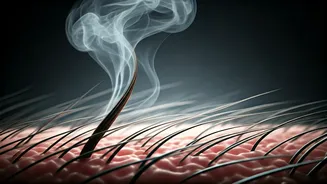
To understand this, we need a quick science lesson. Hair is primarily made of a protein called keratin, held together by chemical bonds, including hydrogen bonds. These hydrogen bonds are weak and break easily when they come into contact with water. During the monsoon, the high concentration of water vapour in the air causes the hair shaft to swell as it absorbs this moisture. This swelling disrupts the protective outer layer of the hair, called the cuticle, causing it to lift and become rough. A swollen, disrupted hair shaft is structurally weaker and more elastic, making it highly susceptible to breakage from simple actions like combing, towel-drying, or even just running your fingers through it. It’s not necessarily that more hair is falling from the root (though that can happen too), but that breakage increases dramatically.
A Breeding Ground for Scalp Issues
Humidity doesn't just attack the hair shaft; it also creates the perfect environment for problems on your scalp. The constant dampness, combined with sweat and the body’s natural oils (sebum), turns your scalp into a breeding ground for fungi and bacteria. This leads to common monsoon woes like greasy scalp, itchiness, and a severe flare-up of dandruff, which is caused by a yeast-like fungus called Malassezia. An unhealthy, inflamed, or infected scalp cannot support strong hair follicles. The inflammation and blockage can weaken the hair roots, leading to increased shedding, or telogen effluvium, where more hairs than usual enter the 'falling' phase of their life cycle.
Practical Habits to Counter the Damage
Fighting back against monsoon hair fall starts with simple, consistent habits. First, never leave your hair wet for long. If you get caught in the rain, wash your hair with a gentle shampoo as soon as you get home to remove acidic rainwater and pollutants. Pat your hair dry with a soft microfibre towel instead of rubbing it vigorously. Avoid combing your hair when it's soaking wet, as this is when it's at its weakest. Use a wide-tooth comb to gently detangle it once it's semi-dry. Lastly, avoid tight hairstyles like high ponytails or tight braids, which put extra tension on the already weakened hair shafts and roots.
Your Monsoon Hair Care Toolkit
Adjusting your hair care routine is crucial. Switch to a mild, sulphate-free shampoo to avoid stripping your scalp of its natural oils. If you're prone to dandruff, incorporate a shampoo with antifungal agents like ketoconazole or zinc pyrithione two to three times a week. While oiling is a traditional remedy, avoid leaving oil on your scalp overnight during the monsoon, as it can clog pores and worsen fungal growth. Instead, apply lukewarm oil for an hour before washing it off. Focus on nourishing your body from within. A diet rich in protein (eggs, lentils, nuts), iron (spinach, dates), and biotin (nuts, seeds) provides the building blocks for strong, healthy hair and helps counteract seasonal shedding.