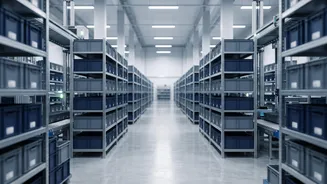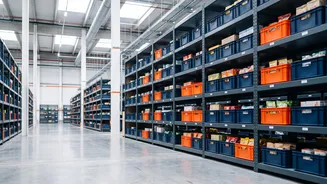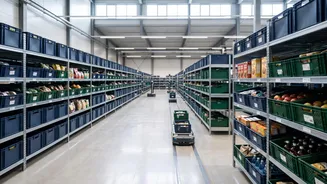





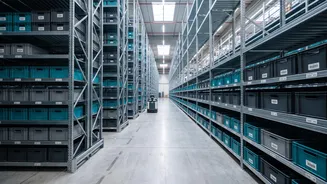


What Exactly Is a 'Dark Store'?
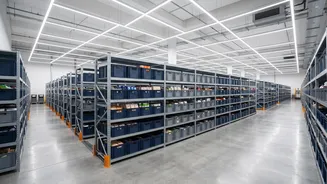
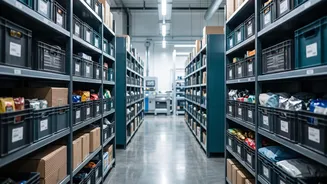
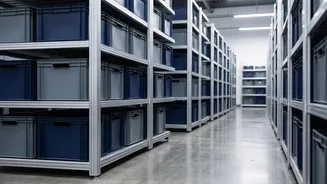
A dark store is a retail establishment that is not open to the public. Think of it as a mini-warehouse or a micro-fulfilment centre designed exclusively for online shopping. Instead of aisles for customers, it has shelves optimised for employees—'pickers'—who
quickly assemble orders for delivery. The entire operation is engineered for one thing: speed. By placing these stores deep inside residential neighbourhoods, quick-commerce (or q-commerce) companies like Blinkit, Zepto, and Swiggy Instamart can deliver groceries, essentials, and other goods to your doorstep in 10 to 30 minutes. To achieve this, each store serves a small radius of only two to three kilometres, which is why so many are needed to cover a city.
Why Bengaluru Is the Epicentre
Bengaluru has become India's undisputed dark store capital, with over 629 locations—more than any other city and representing over 10% of the national total. For a population of around 13 million, this translates to roughly one dark store for every 20,000 residents. This concentration is no accident. The city's unique demographics make it the perfect laboratory for quick commerce. It has a large, tech-savvy population of young professionals, many in dual-income households with high disposable income but very little free time. These consumers were already accustomed to on-demand services thanks to the city being a launchpad for food delivery apps, creating a ready market for the convenience of instant groceries.
The Impact on the City’s Landscape
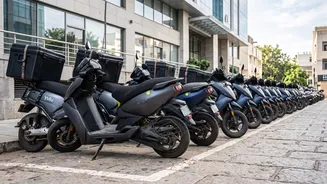
The rapid expansion is visibly changing Bengaluru's real estate and neighbourhood dynamics. Quick-commerce companies are leasing ground-floor spaces of 1,000 to 4,000 square feet in dense residential areas, often choosing underutilised or older commercial properties that were once difficult to rent out. This has revived forgotten commercial spaces and driven up rental yields for property owners by 30-40% compared to traditional retail tenants. However, the boom comes with challenges. Residents in some areas complain about the constant traffic of delivery vehicles and noise. The swarm of delivery partners can lead to congestion in residential lanes, and there are growing concerns about compliance with zoning, parking, and fire safety regulations.
A Real-Time Barometer for Local Jobs
While national job forecasts provide a big-picture overview, they are often lagging indicators. The expansion of dark stores in Bengaluru offers a more immediate, ground-level snapshot of employment trends, particularly in the gig economy. Each new dark store creates jobs for pickers, packers, store managers, and a fleet of delivery riders. The quick commerce sector is highly labour-intensive, employing an estimated 62 to 64 people per crore of monthly gross merchandise value—significantly more than traditional e-commerce. The demand for these roles provides a real-time signal of economic activity at the neighbourhood level. For instance, the 629 dark stores in Bengaluru are estimated to generate thousands of jobs and millions in annual wages, offering a direct injection of income into local economies. This visible hiring for blue-collar and gig roles provides a tangible counterpoint to broad, often abstract, national employment statistics.
More Than Just a Job Indicator
Ultimately, the dark store phenomenon reflects a deeper shift in consumer behaviour, moving from planned weekly shopping to on-demand 'top-up' purchases. It’s a trend accelerated by the pandemic but sustained by the urban demand for convenience. The success of this model is forcing a re-evaluation of urban logistics and retail strategy. While the focus has been on rapid expansion, companies are now also concentrating on making each store more productive to improve their razor-thin margins. What happens in Bengaluru's quick commerce market—the intense competition, the push for profitability, and the impact on urban life—serves as a crucial indicator for the future of retail not just in the city, but across India. As platforms mature, the focus is shifting from simply adding more stores to extracting more value from each one.