


The Himalayan Queen: Kalka to Shimla
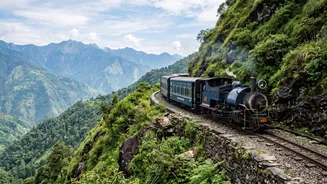
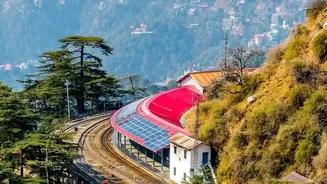
A journey on the Kalka-Shimla Railway is a trip back in time. This UNESCO World Heritage Site, built in 1903, connects the plains of Kalka to the former summer capital of British India, Shimla. The narrow-gauge 'toy train' meanders through the stunning
Shivalik hills, navigating over 100 tunnels and 800 bridges on its 96-kilometre route. The gateway, Kalka, is easily accessible from Delhi and Chandigarh, making it a popular starting point for travellers. The five-to-six-hour journey offers breathtaking views of pine forests, rolling hills, and quaint colonial-era stations like Barog, famous for its long tunnel and picturesque setting. For the best valley vistas, snag a seat on the right side of the train when travelling uphill to Shimla.
The Tea Garden Route: Darjeeling Himalayan Railway
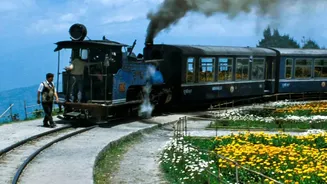
Perhaps the most famous of India's mountain railways, the Darjeeling Himalayan Railway (DHR) is another UNESCO World Heritage icon. Known affectionately as the 'Toy Train', this railway, operational since 1881, chugs along a tiny two-foot narrow-gauge track from New Jalpaiguri (NJP) in the plains to the hill station of Darjeeling. The full 88-kilometre journey takes over seven hours, but many visitors opt for the shorter 'Joy Ride' from Darjeeling to Ghum. This two-hour round trip includes a stop at Ghum, India's highest railway station, and the spectacular Batasia Loop, a 360-degree spiral where the train loops over itself to gain height, offering panoramic views of Darjeeling and Mount Kanchenjunga on clear days.
The Blue Mountain Express: Nilgiri Mountain Railway
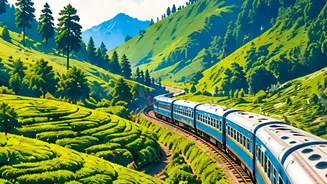
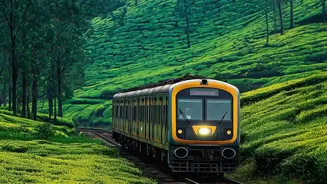
In South India, the Nilgiri Mountain Railway (NMR) offers an equally enchanting, though technologically distinct, experience. This UNESCO-listed line, built in 1908, runs from Mettupalayam to the popular hill station of Udhagamandalam, better known as Ooty. What makes this railway unique is its use of a rack and pinion system on the steepest section between Mettupalayam and Coonoor to grip the tracks—it's the only one of its kind in India. The 46-kilometre journey ascends from 326 metres to over 2,200 metres, passing through 16 tunnels, 250 bridges, and verdant tea plantations of the Nilgiri Hills, or 'Blue Mountains'. The slow pace, averaging just over 10 km/h, makes it the slowest train in India, perfect for soaking in the scenery.
The Car-Free Climb: Matheran Hill Railway
Close to Mumbai and Pune, the Matheran Hill Railway provides a charming escape to Asia's only automobile-free hill station. The journey begins at Neral Junction and covers a scenic 21-kilometre route through dense forest to Matheran. Opened in 1907, the train zigzags up the mountain, navigating sharp curves that earn it the nickname 'one kiss tunnel'. The roughly two-hour ride is part of the destination's appeal, delivering passengers to a peaceful plateau where transport is limited to foot, horseback, or hand-pulled rickshaws. Note that the full line from Neral often suspends services during the monsoon season (June to October), though a shuttle service from Aman Lodge to Matheran typically remains operational.
The Valley Vistas: Kangra Valley Railway
Often overshadowed by its more famous counterparts, the Kangra Valley Railway is one of Himachal's hidden gems and is on the tentative list for UNESCO World Heritage status. Stretching 164 kilometres from Pathankot to Joginder Nagar, this is a journey defined by wide, open vistas rather than tight mountain loops. The train meanders through the expansive Kangra Valley, offering almost continuous, breathtaking views of the snow-capped Dhauladhar mountain range. With over 900 bridges and just two tunnels, the focus is firmly on the panoramic landscape. The unhurried, ten-hour journey provides an authentic glimpse into local life, connecting important towns like Kangra and Palampur, famous for its tea gardens.