



A 'Cosmic Campfire' in the Sky
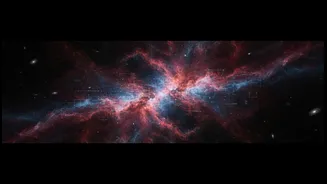
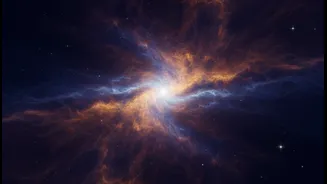
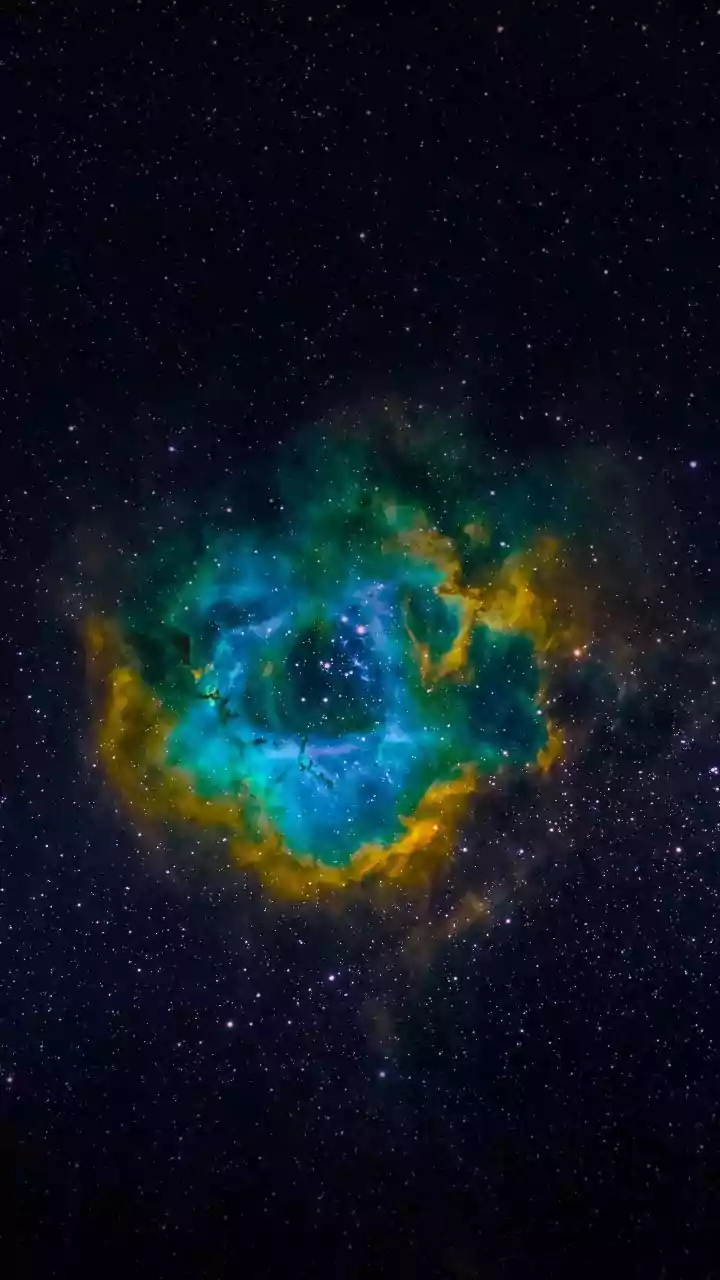
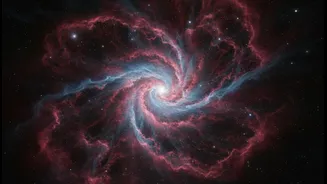
The latest celestial portrait from the Hubble Space Telescope showcases a region of furious star-birth with an unusually familiar glow. Nicknamed the 'Cosmic Campfire', the image captures part of the nebula NGC 2074, a sprawling cloud of gas and dust
located about 170,000 light-years away in a neighbouring galaxy. In the image, billowing clouds of crimson gas, heated by the intense radiation of newborn stars, truly resemble smoke and embers drifting from a fire. This visual echo of a terrestrial campfire isn't just a coincidence; it's a result of both chaotic cosmic physics and deliberate scientific artistry.
The Science Behind the Spectacle
What we're seeing is a 'firestorm of raw stellar creation'. Massive, hot young stars, many far larger than our sun, are blasting their surroundings with powerful stellar winds and ultraviolet radiation. This energy carves the surrounding gas and dust into the dramatic ridges and pillars that give the scene its depth and texture. The colours themselves are a form of translation. Telescopes like Hubble capture light in wavelengths the human eye can't see. Scientists assign colours to different chemical elements to make them visible. In this case, emissions from sulphur are mapped to red, hydrogen to green, and oxygen to blue, a palette choice that enhances the fire-like appearance and helps us intuitively understand the energetic processes at play.
Why We See Ourselves in the Stars
This feeling of familiarity with cosmic objects is a powerful and recurring theme in astronomy. When we see a shape like a campfire or a horse's head in a nebula, we are experiencing a form of pareidolia, the same psychological phenomenon that makes us see faces in clouds. But it goes deeper than that. These images resonate because they connect the grand scale of the universe to human experience. A star-forming region isn't just an abstract concept; when presented as a 'Cosmic Campfire', it evokes feelings of warmth, community, and creation—ideas we can all understand. The choice of colours and the descriptive nicknames are conscious efforts by scientists to bridge the immense gap between our daily lives and the universe's vast, complex mechanics.
An Enduring Legacy of Connection
For over three decades, the Hubble Space Telescope has done more than just collect data; it has fundamentally changed our view of the universe. Its images have become cultural touchstones, making the cosmos accessible and inspiring awe in a new generation. This latest view of NGC 2074 is a perfect example of that legacy. It's a data visualization, a piece of scientific evidence, and a work of art all at once. By showing us a 'campfire' among the stars, Hubble reminds us that the same elements forged in these stellar nurseries make up our planet and our bodies. The processes may be alien, but the story they tell is, in the end, our own creation story.