





Method 1: Using the Income Tax E-Filing Portal
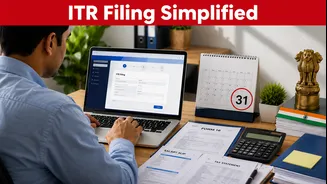
The official e-Filing portal is the primary and most detailed source for tracking your ITR and refund status. You will need your PAN (used as your User ID) and password to log in. Once you have these details, follow these steps. 1. Go to the Income Tax
Department's official e-Filing website (incometax.gov.in) and log in to your account. 2. After logging in, navigate to the main menu and click on 'e-File'. 3. Under the 'e-File' menu, select 'Income Tax Returns', and then click on 'View Filed Returns'. 4. A new page will display a list of all the returns you have filed. Find the return for the current Assessment Year (AY 2026-27). 5. Click on 'View Details' for that specific return. This will open a detailed timeline showing the entire lifecycle of your ITR, from filing and verification to processing and the final refund status.
Method 2: Through the TIN-NSDL Website
An alternative method that does not require you to log in is available through the Tax Information Network (TIN), which is managed by Protean eGov Technologies (formerly NSDL e-Governance). This is a quicker way to get a basic status update. 1. Visit the TIN website page for refund status: tin.tin.nsdl.com/oltas/refund-status-pan.html. 2. On this page, you will need to enter your Permanent Account Number (PAN) and select the relevant Assessment Year (e.g., 2026-2027). 3. Enter the captcha code displayed on the screen for verification purposes. 4. Click 'Proceed' or 'Submit'. The page will then display the current status of your refund. It is important to note that the status on the TIN-NSDL portal is typically updated about 10 days after the refund has been sent by the Income Tax Department to the bank. For real-time processing updates, the e-Filing portal is more comprehensive.
Understanding Your ITR Refund Status
When you check your status, you will encounter several terms. Here’s what they typically mean: Processed: The Centralised Processing Centre (CPC) has successfully reviewed your return, and a refund has been determined. Refund Issued/Sent: The department has approved the refund and sent it to the bank for payment. It should be credited to your account within a few working days. No Demand No Refund: This means your tax calculation perfectly matched the department's assessment. You do not owe any extra tax, nor are you eligible for a refund. Refund Failed: The refund transaction could not be completed. This is usually due to incorrect bank account details, an inactive or closed account, or a non-validated bank account on the portal. * Processed with Refund Due: This status confirms your return is processed and you are eligible for a refund, which is expected to be issued within 20 to 45 days from the processing date.
Common Reasons for Refund Delays or Failure
If your refund is taking longer than the usual four to five weeks after e-verification, there could be several reasons. A common issue is the failure to e-verify the return within 30 days of filing; processing only begins after successful verification. Other frequent causes include providing incorrect bank details like a wrong account number or IFSC code, or using an account that is not pre-validated on the e-filing portal. Mismatches between the income and TDS details declared in your ITR versus the data in your Form 26AS or Annual Information Statement (AIS) can also trigger delays as they require further verification by the department. In some cases, the department may adjust the refund amount against an outstanding tax demand from a previous year.
What to Do If Your Refund Fails
If your status shows 'Refund Failed', you need to take corrective action. The first step is to log in to the e-Filing portal and verify that your bank account details are correct and that the account is pre-validated. If you find an error, such as a closed account or an incorrect IFSC code, you must add a new bank account and complete the validation process. Once you have a correct, pre-validated bank account nominated for refund, you can raise a 'Refund Reissue Request'. This option can be found under the 'Services' menu on the portal. After selecting the relevant Assessment Year, you can submit the request, and the department will re-initiate the refund process to the newly provided account.