



A recent rail crash investigation serves as a stark reminder of the invisible systems that ensure our safety. When these complex networks fail, the consequences can be catastrophic, highlighting the vital importance of reliable railway signalling.
The Unseen Guardian of the Tracks
For
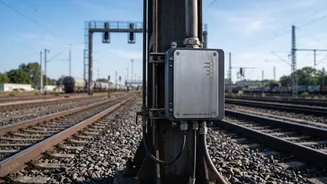
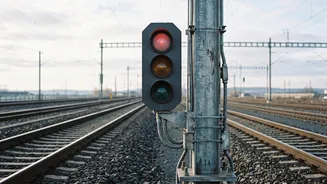
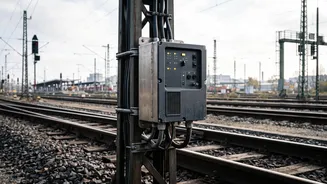
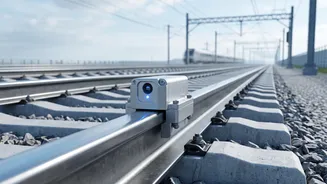
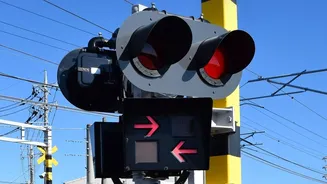
most passengers, railway signals are little more than the red, yellow, and green lights seen from a train window. In reality, they are the public face of a vast, complex nervous system that keeps rail networks moving safely. This system, known as railway signalling, is designed to do one thing above all else: keep trains from colliding. It does this by dividing the track into segments called 'blocks'. A core principle of safe railway operation is that only one train is allowed in any given block at a time. Signalling systems use a combination of track circuits, axle counters, and interlocking mechanisms to detect a train's presence and automatically protect the space around it. They control track switches, provide movement authority to drivers, and ensure safe distances are maintained, a critical task given a train's immense weight and inability to stop quickly.
When Systems Fail and Humans Intervene
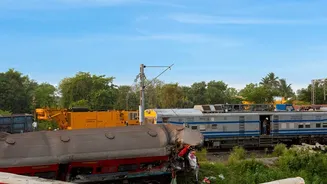
The tragic collision in the province of Toledo, Spain, on October 28, 2026, offers a harrowing case study. A failure in the main automated signalling system forced a switch to manual operations. Under this procedure, responsibility shifted to human controllers to maintain safe separation between trains. Following the system failure, one high-speed train was left stationary on the track after its driver was unable to restart. A second high-speed train, travelling behind it, was subsequently given instructions to proceed. Minutes later, it collided with the stationary train at an estimated speed of 160-200 km/h, resulting in a devastating accident with numerous fatalities and injuries. The investigation immediately focused on the sequence of events after the automated system failed, highlighting the critical juncture where technology breaks down and human decision-making becomes the last line of defence.
The Push for Smarter Safeguards
Incidents like the one in Toledo underscore the limitations of older systems and the constant push for more advanced safeguards. In the United States, many freight and passenger lines have implemented Positive Train Control (PTC). PTC is a GPS-based technology that acts as a digital failsafe. It knows a train's location, speed, and movement authority and can automatically apply the brakes to prevent train-to-train collisions, derailments from excessive speed, or moving through a wrongly aligned switch. It is designed specifically to override human error, which remains a factor in many accidents. The investigation into the Toledo crash, where a manual instruction was given despite a train being stopped on the tracks, is precisely the kind of scenario PTC is built to prevent.
Lessons for the Indian Railways Network
The lessons from such tragedies resonate deeply in India, home to one of the world's largest and busiest rail networks. Recognizing the need for an advanced safety net, Indian Railways has been developing and deploying its own indigenous Automatic Train Protection (ATP) system called 'Kavach'. Similar in principle to PTC, Kavach is designed to prevent collisions by automatically applying brakes if a driver misses a red signal or exceeds speed limits. The system displays signal aspects inside the driver's cabin and can take control of the train to prevent it from entering an occupied block. As Kavach is progressively rolled out across high_density routes, it represents a monumental step toward modernizing the safety infrastructure of India's lifeline. The events in Toledo are a powerful reminder that investing in and maintaining these advanced protection systems is not a luxury, but a fundamental necessity for ensuring passenger safety on a massive scale.