



More Than Just Walking with Sticks
At first glance, Nordic walking looks like hiking, but its origins and purpose are quite different. Born in Finland as a summer training method for cross-country skiers, the activity uses specially designed poles to transform walking into a comprehensive
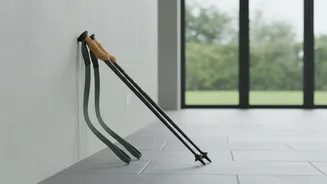
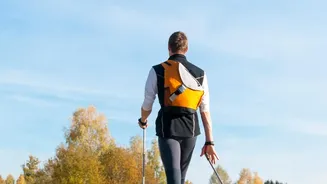
exercise. Unlike trekking poles used for stability on uneven terrain, Nordic walking poles are used to propel you forward. The technique involves planting the poles at an angle behind you and pushing off with each stride, mimicking the fluid motion of cross-country skiing. This coordinated push-and-swing movement is the key that unlocks a whole new level of muscular engagement.
An Upper-Body Workout in Disguise
The magic of Nordic walking lies in how it activates muscles that a regular walk completely ignores. While a standard stroll engages roughly 50% of your body's muscles, adding the poles correctly can boost that figure to an incredible 90%. Every time you plant a pole and push, you're working your arms, chest, shoulders, and back. Specifically, this movement targets the triceps, deltoids, pectorals, and the large latissimus dorsi muscles in your back. This constant engagement not only builds strength and tones the upper body but also improves shoulder mobility and can help reduce tension in the neck and shoulders.
The Core of the Matter
The benefits don't stop at your arms and shoulders. The rhythmic, oppositional movement of arms and legs in Nordic walking—swinging your left arm as your right leg steps forward, and vice versa—creates a gentle rotation in your torso. This subtle twisting motion actively engages your core muscles, including your abdominals and lower back, with every step you take. Unlike doing crunches at the gym, this is functional core stabilization that supports better balance and helps build strength that you use in everyday life. A stronger core is fundamental to good posture, which is another significant benefit of the activity.
Improved Posture and Higher Calorie Burn
The act of using the poles naturally encourages you to walk in a more upright position, preventing the slouching that can come with fatigue during a long walk. This improved posture helps align the spine, opens up the chest for better breathing, and can even alleviate some types of back pain. And for those interested in the metabolic benefits, the data is compelling. By recruiting so many additional muscles, Nordic walking significantly increases your energy expenditure. Studies show it can burn anywhere from 20% to over 45% more calories than regular walking at the same pace, without necessarily feeling much harder. This makes it a highly efficient way to boost your fitness.
Why Is It Popular Now?
The renewed interest in Nordic walking isn't surprising. It's a low-impact exercise, meaning it's gentle on the joints like the knees and hips, making it accessible to people of all ages and fitness levels. The poles help distribute the body's weight, reducing strain on the lower body. In a world where people are increasingly seeking outdoor, sustainable, and effective workouts, Nordic walking fits perfectly. It offers a more challenging and holistic alternative to a simple walk without the high impact of running, providing both a cardiovascular and a strength-building workout in one session.