







The New Spinoffs Are Mindsets
For decades, the benefits of space exploration on Earth were measured in “spinoff” products. Scratch-resistant lenses, smartphone cameras, and even infant formula all have roots in the race to the stars. While these innovations have improved daily life,
a much deeper transfer of knowledge is now underway. It's no longer just about discrete technologies, but about entire systems and psychological strategies designed for the harshest environment imaginable. The challenges of long-duration spaceflight—extreme isolation, resource scarcity, and the need for absolute sustainability—are mirroring the challenges we face as a global community. As a result, the principles of astronaut life, from mental resilience to closed-loop living, are offering us powerful tools to navigate a changing world.
The Ultimate Guide to Isolation
Astronauts are the original experts in social distancing. Confined to small spaces for months, they undergo rigorous psychological training to manage stress, conflict, and isolation. NASA developed frameworks to help astronauts cope, focusing on maintaining routines, staying connected with loved ones through video calls, and cultivating an “expeditionary mindset”—a focus on teamwork, self-care, and mutual support. These exact strategies became a global playbook for mental well-being during recent periods of widespread isolation. The lessons learned from keeping astronauts psychologically fit are now informing how we approach mental health in high-stress jobs, remote work environments, and our increasingly digital social lives. The key takeaways—the importance of structure, purpose, and deliberate connection—have proven universally applicable.
Sustainability in a Spaceship
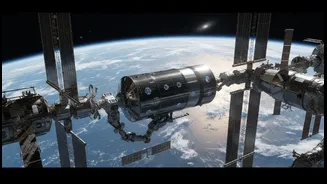
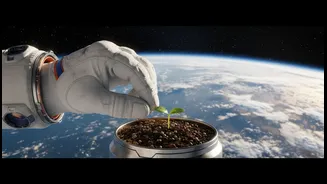
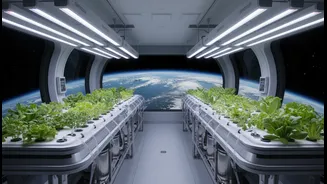
On the International Space Station (ISS), nothing is wasted. Every drop of water, including sweat and urine, is recycled. Air is scrubbed and oxygen is regenerated from carbon dioxide. This is the essence of a Closed-Loop Life Support System (CELSS), a concept pioneered for space where resupply is impossible or prohibitively expensive. Today, this approach is seen as a critical model for sustainability on “Spaceship Earth.” The technologies developed to purify water and air in orbit are finding applications in providing clean resources in remote or disaster-stricken areas on the ground. Furthermore, the agricultural experiments on the ISS, aimed at growing food in space, are advancing vertical farming and high-yield agriculture techniques that can help address food security in a world with limited land and water.
Your Body, Remotely Monitored
Keeping humans healthy in microgravity is a monumental challenge. Astronauts face muscle atrophy and bone density loss, requiring about two hours of daily exercise on specially designed equipment. Devices like the Advanced Resistive Exercise Device (ARED) simulate weightlifting using vacuum cylinders, and this technology is being adapted for physical therapy on Earth. Moreover, the need for constant health monitoring in space has accelerated the development of wearable sensors and telehealth. Astronauts use smartwatches, biometric-tracking shirts, and portable ultrasound devices to monitor their vitals in real-time. This same technology is now in our watches and fitness trackers, empowering everyday people to take control of their health data and enabling doctors to monitor patients remotely, a field that has expanded dramatically.