






A Policy Shift Opens the Skies
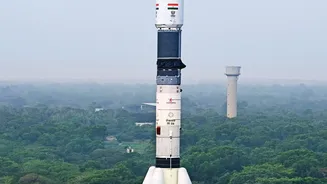
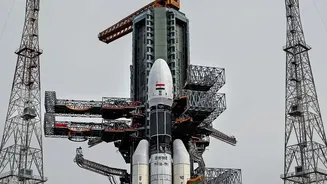
The game-changer for India's space sector was the government's decision in 2020 to open it up to private companies, a move formalised by the Indian Space Policy 2023. This created a new framework where the Indian Space Research Organisation (ISRO) focuses
on research and development, while private players handle manufacturing and commercial services. To manage this, the government established IN-SPACe (Indian National Space Promotion and Authorisation Centre) as a single-window agency to promote and authorise private space activities. This has led to a surge in private investment and a dramatic increase in the number of space startups, from just one in 2014 to around 440 by mid-2026.
Downstream Data: The Real Job Engine
While rocket scientists and aerospace engineers are crucial, the bulk of new jobs will come from 'downstream' applications. This refers to the services and products developed using data collected by satellites. Think of it this way: launching a satellite is just the first step. The real value lies in analysing its imagery and signals to solve problems on the ground. This creates demand for data scientists, GIS analysts, software developers, and machine learning engineers who can turn raw satellite data into actionable insights for various industries. India's space economy, currently valued at around $9 billion, is projected to soar to over $44 billion by 2033, largely driven by these downstream activities.
Transforming Agriculture and Climate Action
The agriculture sector is a prime example of the space economy's impact. Satellite imagery helps in precision farming, allowing for monitoring crop health, managing water resources, and predicting yields with greater accuracy. This creates jobs not only for remote sensing engineers but also for agronomists and business analysts who can translate this data for farmers and financial institutions. Similarly, satellite data is essential for monitoring climate change, managing natural resources, and providing timely warnings for disaster management. Companies are now building platforms that use this data to help governments and industries adapt, creating a new sub-sector of climate tech jobs.
Smarter Logistics, Infrastructure and Urban Planning
Satellite-based positioning and navigation services are the backbone of modern logistics and transportation. From optimising delivery routes for e-commerce giants to managing large fleets of trucks, the efficiency gains are enormous. This generates demand for logisticians and software developers skilled in integrating geospatial data. Furthermore, Earth observation data is being used for urban planning, monitoring infrastructure projects, and managing smart cities. This requires a workforce of urban planners, civil engineers, and data analysts who can use this information to build more sustainable and efficient urban environments.
The Rise of Private Startups and Manufacturing
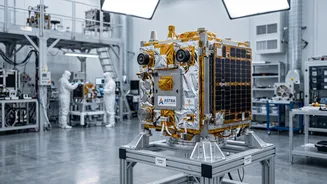
The new policies have fuelled a vibrant startup ecosystem. Companies like Skyroot Aerospace, which developed India's first privately built rocket, and Pixxel, which is building a constellation of hyperspectral imaging satellites, are creating a wide range of jobs. They hire propulsion, structures, and avionics engineers, but also require talent in finance, marketing, and business development. This growth also stimulates the 'upstream' manufacturing sector. The increased demand for satellite components, rocket parts, and ground systems encourages 'Make in India' initiatives, creating high-skilled jobs in advanced manufacturing and materials science.