







The Months-Long Preparation
Long before the first pandals are erected, the 'karigars' (artisans) in Kolkata's sweet shops begin their own intricate puja. The festival rush doesn't start in October; it begins months earlier with meticulous planning. Sourcing is paramount. Orders
are placed for tonnes of high-quality chhena (fresh cheese curds), premium nolen gur (date palm jaggery) for the all-important sandesh, and the finest besan and ghee. For many small, artisanal shops, this is the most critical time of year, dictating their annual fortunes. To meet the surge, temporary staff are hired, often doubling or tripling the kitchen's capacity. These are not just extra hands but skilled artisans themselves, many of whom travel from rural Bengal for this seasonal work, bringing generations of expertise with them. This period is also fraught with anxiety, as seen this year with city-wide food safety inspections just weeks before the festival, forcing many shops to renovate and ensure compliance on a tight deadline.
Scaling Artistry, Not Just Production
How does a kitchen that prides itself on handcrafted quality suddenly produce ten or twenty times its normal output? The answer lies in organisation and specialisation. Inside these bustling workshops, the process resembles a symphony of controlled chaos. The master 'halwais' oversee the entire operation, but the work is broken down into an assembly line of pure craft. One team might focus solely on kneading chhena to the perfect consistency, a crucial step for soft sandesh. Another group will be dedicated to preparing syrups, while a third focuses on the delicate art of shaping and garnishing. Perishable sweets like those made from milk are prepared last to ensure maximum freshness for the crucial days of Ashtami, Navami, and Dashami. The equipment gets an upgrade, too. Larger kadhais (woks) are brought out, and storage solutions are maximised to handle the sheer volume of ingredients and finished products, all while navigating the challenges of rising input costs for ingredients like sugar.
The 24/7 Sweet Symphony
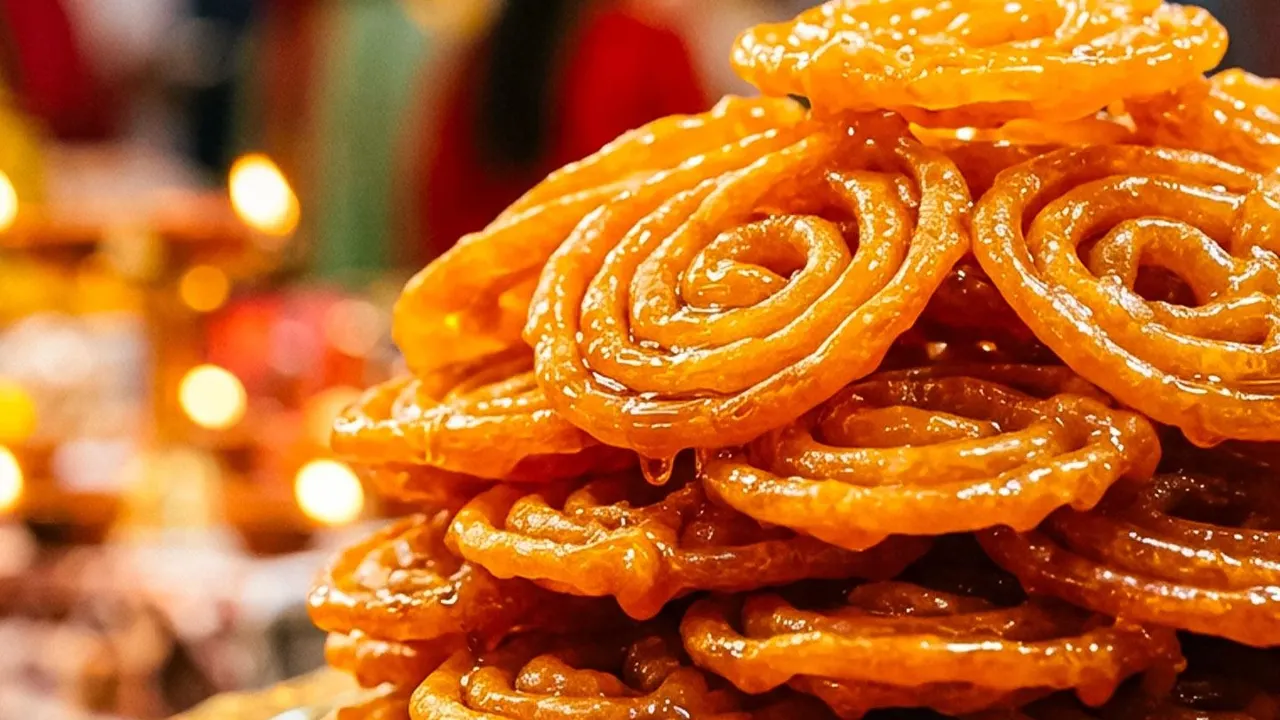
In the final weeks leading up to and during Durga Puja, many sweet shop kitchens operate around the clock. Sleep becomes a luxury the artisans can ill afford. Shifts are organised to ensure a continuous flow of fresh mithai. The pre-dawn hours are often for preparing the bases and doughs, while the daylight hours are for cooking, shaping, and fulfilling the first wave of orders. The work is physically demanding, with artisans spending hours standing before hot stoves and kadhais. It's a testament to their passion that even under immense pressure, the quality of a delicate talshash sandesh or a perfectly syrupy pantua remains consistent. The air is thick with the aromas of boiling milk, caramelising sugar, and fragrant cardamom—the signature scent of Bengal's grandest festival.
From Kitchen to Counter
The logistical challenge doesn't end in the kitchen. Managing the customer side of the operation is another feat entirely. Long queues snake out of the most famous establishments from morning until late at night. To manage the crush, shops implement token systems and separate counters for bulk orders and pre-packed boxes. In recent years, the rise of online food delivery platforms has added another layer of complexity. Now, alongside the walk-in customers and large corporate gift orders, shops must manage a constant stream of online orders, requiring dedicated staff to pack and coordinate with delivery partners. Corporate gifting is a massive driver of sales, with companies placing bulk orders weeks in advance for customised boxes to be sent to clients and employees, forming a crucial part of the production plan.
Innovating Within Tradition
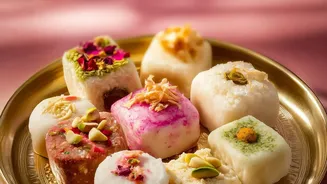
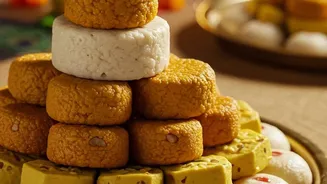
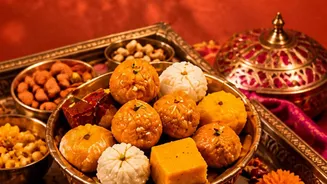
While classic Durga Puja sweets like sandesh, mishti doi, and various 'naru' (laddoos) remain the undisputed stars, modern artisans are not afraid to innovate. Many shops now offer a 'fusion' line to appeal to younger palates, with creations like chocolate-filled sandesh, baked rosogolla, and dessert-inspired mithai that incorporate flavours like tiramisu or cheesecake. This year, some pandals even celebrated Bengal's sweet heritage as their central theme, showcasing the history of legendary shops and reviving long-lost traditional sweets. This balancing act—honouring the timeless recipes that are central to the Puja bhog (ritual offering) while introducing exciting new varieties—is key to their enduring success. It ensures that while traditions are upheld, the evolution of taste is also celebrated.