





The Predictable Weekend Nightmare
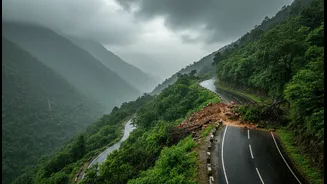
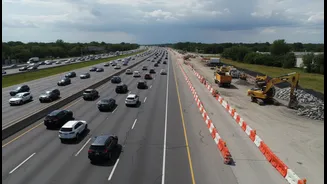
The scene has become painfully familiar. An announcement is made, often at short notice, that a section of the Mumbai-Pune Expressway will be closed. What follows is a cascade of failure. On July 6, 2026, heavy rainfall and landslides forced the complete
shutdown of both the expressway and the old highway, leaving commuters stranded for hours. While such 'acts of God' are unavoidable, the response to both them and to planned maintenance closures reveals a deeper problem. Traffic is diverted onto older, narrower routes like the old Mumbai-Pune Highway (NH-48), which are immediately overwhelmed. Motorists report being stuck for hours in bumper-to-bumper traffic, sometimes since the early morning, turning a three-hour journey into an all-day ordeal. This isn't a rare accident; it's a recurring failure of planning for one of India's most critical transport corridors.
Why Current Traffic Management Fails
The core issue is a reactive, rather than proactive, approach to traffic management. Communication is a significant weak point. While authorities like the Maharashtra State Road Development Corporation (MSRDC) issue advisories, they often come too late or fail to reach the wider public effectively, leading many drivers to head directly into the gridlock. Once a diversion is in place, the on-ground management is frequently inadequate. There's a visible lack of highway patrol or police presence at key choke points to guide confused drivers or manage the flow onto alternate routes. This was evident during the recent landslide-induced closures, where long traffic snarls were triggered as vehicles were rerouted through Lonavala with little guidance. The system lacks the agility to handle the sheer volume of weekend traffic, which includes not just regular commuters but also a heavy influx of tourists and cargo trucks.
The Human and Economic Cost
Being stranded for hours is more than just frustrating. It has real consequences. Ambulances can get stuck, people miss critical medical appointments, and families with children are left without access to food, water, or restrooms for extended periods, as seen during a tanker accident that caused a 32-hour standstill. The economic cost is also staggering. The Mumbai-Pune corridor is a vital commercial artery. When it freezes, goods don't move, business meetings are cancelled, and productivity plummets. Furthermore, the chaos on diversion routes creates new dangers. Desperate drivers may attempt risky manoeuvres, and the strain on smaller roads unprepared for expressway-level traffic can lead to more accidents. The problem is compounded by a lack of lane discipline, with heavy vehicles often blocking faster lanes, a systemic failure that turns any slowdown into a complete halt.
A Blueprint for Safer, Smarter Closures
Necessary infrastructure work and emergency responses don't have to result in chaos. A smarter approach is possible. First, scheduling must improve. Planned closures should be avoided on long weekends and peak holiday periods whenever feasible. Second, communication needs a massive overhaul. Authorities must use dynamic, real-time alerts pushed to navigation apps, social media, and digital signboards well before the entry points to the expressway. This allows drivers to make informed decisions before they are trapped. Third, on-ground presence is non-negotiable. Trained traffic police must be deployed at every major diversion point to actively manage traffic flow. Finally, technology must be leveraged more effectively. While an Intelligent Traffic Management System (ITMS) is being implemented to track violations, its scope should be expanded to include predictive traffic modelling for closures and real-time diversion management. A phased plan focusing on enforcing lane discipline before, during, and after closures would be the cheapest and most effective infrastructure upgrade.