







Tracing the Sources of the Figures
There isn't one single, official number for the economic cost of air pollution. Instead, the figures come from various respected sources like the World Bank, Greenpeace, and academic studies published in journals like The Lancet. For example, a 2021 study
in The Lancet Planetary Health placed the economic loss from lost output at $36.8 billion in 2019, or 1.36% of India's GDP. Another analysis by Dalberg Advisors for the Clean Air Fund and the Confederation of Indian Industry (CII) estimated the cost to Indian business in 2019 was a staggering $95 billion, or 3% of GDP. More recent reports from 2024 suggest this figure may have ballooned to $260 billion, nearly 6% of GDP. These figures vary because they measure different things over different timeframes, but they all point to the same conclusion: the economic damage is immense.
The Direct Cost: Healthcare and Medical Bills
The most direct financial impact comes from healthcare. Exposure to pollutants like PM2.5 is linked to severe health issues including stroke, heart disease, lung cancer, and chronic respiratory diseases. This translates into hospital visits, long-term medication, and emergency treatments. One crude estimate suggested that the healthcare cost for air pollution-related diseases in 2019 was around $11.9 billion. Another from 2024 placed the figure at $12.3 billion. With out-of-pocket payments accounting for a significant portion of India's total health expenditure, these are costs borne directly by households, turning a national crisis into a personal financial burden.
The Indirect Cost: Lost Labour and Productivity
A less visible but enormous cost is the impact on India's workforce. This happens in two main ways: absenteeism and presenteeism. Absenteeism refers to sick days taken due to pollution-related illnesses, resulting in lost wages and stalled work. One study estimated 490 million workdays are lost annually in India due to this. Presenteeism is when employees show up to work but are less productive due to illness, with one analysis finding this is a major driver of losses, particularly in cognition-heavy sectors like IT. The IT sector alone is estimated to lose $1.3 billion annually to pollution-induced productivity loss. Furthermore, premature deaths caused by air pollution shrink the available workforce. In 2019, lost output from these premature deaths was valued at $28.8 billion, with an additional $8 billion lost to morbidity (illness).
Dollars vs. Rupees: Understanding the Currency
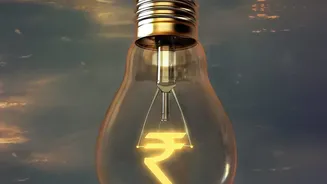
Most international reports, like those from the World Bank or Greenpeace, cite costs in US dollars. This is standard practice for global comparisons, allowing analysts to measure the scale of the problem against other countries. For instance, a Greenpeace report noted India's $150 billion annual cost from fossil fuel pollution was the third-highest globally, after China ($900 billion) and the US ($600 billion). However, for an Indian audience, these figures become more tangible when converted. That $150 billion figure translates to roughly ₹10.7 lakh crore. Similarly, the Dalberg estimate of a $95 billion loss to businesses is equivalent to ₹7 lakh crore, a figure equal to 150% of India's healthcare budget at the time. Understanding this conversion is key to grasping the true scale of the crisis in a domestic context.
A Drag on Overall Economic Growth
Beyond individual and business losses, air pollution acts as a drag on the entire economy. It reduces asset productivity; for example, high levels of smog in 2023 were found to have cut India's solar power generation by nearly 10% by blocking sunlight. High pollution levels deter consumer activity, with footfall in shopping districts dropping on smoggy days. It also impacts investment, as companies may hesitate to set up in a polluted city due to the added costs. Research from the World Bank has shown that higher PM2.5 exposure directly lowers a district's year-on-year GDP growth. The consensus among economists is clear: clean air isn't a cost that hampers growth; it's an investment that enables it.