







The Psychology of 'See Food, Eat Food'
The old saying 'out of sight, out of mind' is a powerful tool for managing eating habits. When food, especially calorie-dense snacks, is visible and easily accessible, it acts as a constant environmental cue that triggers our brain. This isn't a failure
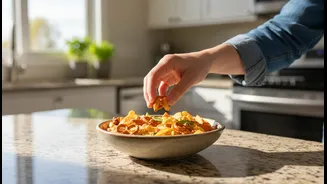
of willpower; it’s a natural response to our surroundings. Research has repeatedly shown that proximity and visibility are huge determinants of consumption. One study found that people were significantly more likely to take a candy when the bowl was placed close to them versus farther away. Another discovered that office workers ate more chocolates when they were in a clear jar on their desk compared to when they were in an opaque jar or stored just a few feet away. Eating often becomes an automatic behaviour, driven by these visual triggers rather than actual hunger.
Make Healthy Choices the Easiest Choices
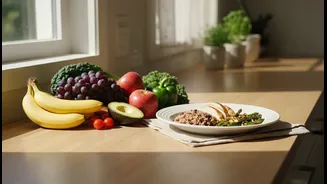
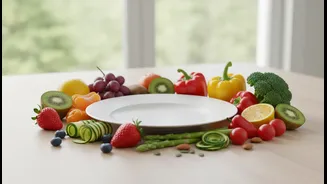
The key to curbing mindless grazing is to work with your brain, not against it. This involves actively designing your environment to make healthy choices more convenient and unhealthy ones less so. Convenience is a powerful driver of food choice. If grabbing a piece of fruit requires the same or less effort than grabbing a cookie, you're more likely to opt for the fruit. Start by rearranging your kitchen. Keep a bowl of fresh fruit like apples and bananas on the counter, making them the most visible and accessible snack. At the same time, move chips, cookies, and other processed snacks to a less convenient location—a high shelf, the back of the pantry, or an opaque container. This simple act of adding a small barrier of effort can dramatically reduce how often you reach for them.
Redesign Your Pantry and Fridge
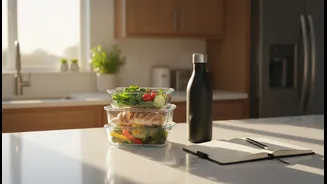
An organised storage space is about more than just aesthetics; it's a strategy for better eating. Use clear containers for healthy staples like pre-cut vegetables, yogurt, and lean proteins, and place them at eye level in your refrigerator. This makes healthy options the first thing you see when you open the door. For the pantry, create a dedicated 'snack zone' so that snacks aren't scattered everywhere. Professional organisers suggest using labelled bins to group similar items, which helps you see what you have and prevents overbuying. Consider removing snacks from their original, brightly coloured packaging, which is designed to be eye-catching. Decanting them into uniform, clear containers can reduce their visual appeal and make your pantry feel more orderly and less like a vending machine. A tidy kitchen has even been linked to eating fewer calories.
Embrace Strategic Portion Control
The size of the container has a significant impact on how much we eat, often without us realising it. Studies have consistently shown that people consume more when served from larger packages or bowls. To combat this, avoid eating directly from a large bag or box. As soon as you get home from the store, pre-portion snacks like nuts, crackers, or trail mix into small, individual bags or containers. When you feel the urge to snack, you can grab a single portion, creating a natural stopping point. Using smaller plates and bowls for your meals and snacks can also help. This simple visual trick can make a standard portion appear more substantial, leading to increased satisfaction with less food.
Tune Into Your Hunger Cues
While changing your environment is crucial, it's also helpful to practice tuning into your body's actual needs. Mindless eating is often a response to boredom, stress, or habit, not true physical hunger. Before reaching for a snack, take a moment to pause and ask yourself if you're genuinely hungry. Signs of physical hunger can include a rumbling stomach or a dip in energy, whereas a craving for a specific food is often emotionally driven. Sometimes, what we perceive as a hunger pang is actually thirst. Try drinking a glass of water and waiting a few minutes to see if the urge to snack subsides. Creating this brief pause allows you to move from a mindless reaction to a mindful decision.