






A Shock to the System
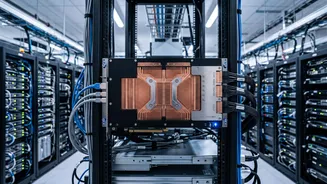
The latest World Energy Outlook from the International Energy Agency (IEA) has put a startling figure on our digital habits. By 2030, the world's data centres are projected to consume around 1,000 terawatt-hours of electricity. To put that in perspective,
that is roughly double their current use and more than the total annual electricity consumption of a country like Japan. This growth is not a gentle curve; it is a sharp acceleration. The IEA's base case scenario sees data centre electricity use growing by about 15% every year until 2030, a rate more than four times faster than the growth of all other electricity demand combined. While data centres will still only account for around 3% of total global electricity use, their concentrated and rapid expansion presents a significant challenge to power grids worldwide.
The AI Revolution's Power Thirst
What is driving this unprecedented surge? The answer, in large part, is Artificial Intelligence. While streaming and cloud services continue to grow, the energy required for AI is in another league entirely. According to the IEA, AI will be responsible for about three-quarters of the growth in data centre electricity demand over the coming years. Training and running complex AI models on specialised servers is incredibly power-intensive. The IEA notes that electricity consumption from these 'accelerated servers' is projected to grow by 30% annually. This means that almost half of the entire increase in global data centre power use will come from hardware running AI applications. As a result, carbon emissions from the sector are projected to climb by 70% by 2030, as the demand for power outpaces the construction of renewable energy sources in key regions.
The Challenge for India
This global trend has profound implications for India, a nation rapidly expanding its own digital infrastructure. India's data centre capacity is on a steep upward trajectory, projected to grow from around 1.5 gigawatts (GW) in 2025 to as high as 12 GW by 2030. This expansion is driven by the government's Digital India initiatives, a boom in e-governance, and the scaling of local enterprise and AI development. Consequently, the electricity consumption from data centres in India is expected to rise sharply, potentially accounting for up to 3% of the country's total electricity demand by 2030, up from less than 1% today. This puts increasing pressure on the national grid and highlights the urgent need for sustainable power solutions. Major operators are already exploring large-scale renewable power agreements to meet this demand and manage costs, with experts suggesting India will need 20 GW of dedicated solar capacity just for data centres by 2030.
The Search for Solutions
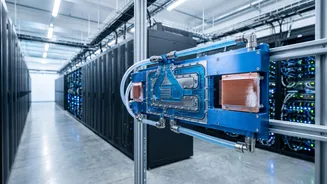
The tech industry is not blind to the challenge. There is a concerted push for greater efficiency through innovations in cooling systems, server hardware, and software optimisation. However, the IEA's report makes it clear that efficiency gains are at risk of being completely overwhelmed by the sheer scale of AI-driven demand. The geographical power mix is also a critical factor. While the European Union is expected to power 70% of its data centres with renewables by 2030, the outlook is different elsewhere. In the US, natural gas is projected to supply about 60% of data centre electricity, while in China, coal is expected to fuel roughly half of the power for AI data centres. For its part, AI could also be part of the solution, with the potential to optimise power grids, improve the forecasting of renewable energy generation, and reduce outages. This creates a complex dynamic where the technology driving the problem may also hold the keys to managing it.