

The Perseid Meteor Shower
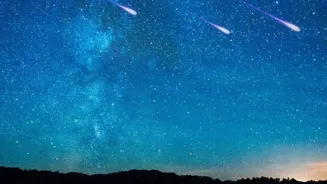
August's headline event is the annual Perseid meteor shower, one of the best of the year. The shower peaks on the night of August 12-13, offering a fantastic show. This year's peak is perfectly timed with a New Moon, which means the skies will be exceptionally
dark, allowing even faint meteors to shine. Under ideal conditions, away from city lights, you could see up to 90 or 100 meteors per hour. The Perseids are known for their bright, fast meteors that often leave persistent trails. For the best views in India, find a dark location and look towards the northeastern sky after midnight, with the activity getting better in the pre-dawn hours of August 13.
A Parade of Planets Before Dawn
Mid-August features a stunning planetary alignment visible in the pre-dawn sky. Around August 12 to 18, you can spot a parade of six planets: Jupiter, Mercury, Mars, Saturn, Uranus, and Neptune. Mars and Saturn will be relatively easy to spot with the naked eye. Mars will appear with its distinct reddish glow high in the eastern sky, while Saturn will shine with a steady, yellowish light further south. Mercury and Jupiter will be much lower on the eastern horizon, making them a challenge to spot in the morning twilight. For Uranus and Neptune, you will need a pair of binoculars or a small telescope. The best time to catch this lineup is about an hour before your local sunrise.
The Heart of the Milky Way
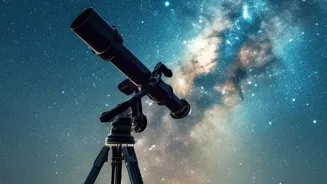
While the monsoon can be a challenge, any clear night in August is a prime opportunity to witness the core of our own galaxy, the Milky Way. The brightest and most dramatic part of the Milky Way is located in the constellation Sagittarius, which appears in the southern sky during August evenings. To see it, you must escape the light pollution of cities and find a truly dark site. Places in high-altitude regions like Ladakh or desert areas like the Rann of Kutch are ideal, as they receive less monsoon rain. After a rain shower, the air is often washed clean of dust, offering exceptionally clear views of this hazy, star-filled band stretching across the sky.
The Teapot and the Scorpion
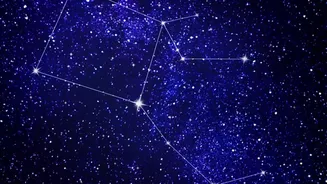
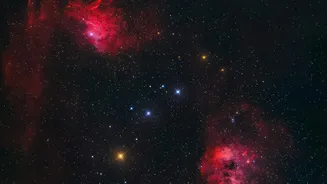
While you're looking south for the Milky Way, you can easily spot two of the most prominent constellations of the season: Scorpius and Sagittarius. Scorpius, the Scorpion, is one of the few constellations that truly resembles its namesake, with a curving tail and a bright, reddish star, Antares, marking its heart. Just to the east of Scorpius lies Sagittarius, the Archer, whose brightest stars form a pattern that looks remarkably like a teapot. The 'spout' of the teapot famously points directly toward the dense centre of the Milky Way galaxy. These constellations serve as excellent markers for navigating the rich southern sky on a clear August night.
A Hint of a Partial Lunar Eclipse
To close out the month, a partial lunar eclipse will occur on August 28. During this event, a portion of the Full Moon will pass through the darkest part of Earth's shadow, known as the umbra. This will cause one edge of the Moon to appear noticeably dimmer or even reddish. However, the visibility of this particular eclipse in India may be limited or not observable, so it is best to check local astronomy resources closer to the date for precise timings and viewing prospects in your specific location.