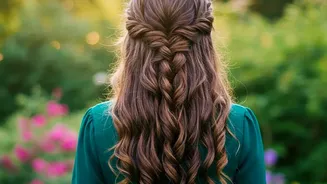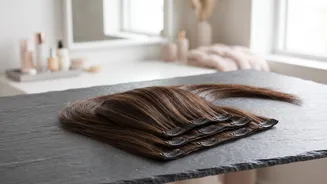



Anyone who has invested in hair extensions knows the frustration of a loose braid or a slipping weft. The secret to a more secure and longer-lasting style might be simpler than you think: it's all about the timing and texture of your natural hair.
The Science of Better Grip
Freshly
washed and conditioned hair can often be too soft and slippery for styling. The clean, smooth surface of each strand makes it difficult for braids and extensions to get a firm hold, causing them to loosen or slip prematurely. Stylists refer to the texture that helps styles hold as 'grip'. This is where second-day hair has a distinct advantage. After about 24 hours, the scalp's natural oils, or sebum, have had time to distribute through the hair. This light coating provides just enough texture and weight to create friction, helping braids and extensions stay securely in place. This doesn't mean your hair should be oily; rather, it's about moving past that overly silky, just-washed phase.
The Damp Hair Advantage
Braiding slightly damp hair offers a different kind of grip. When hair is damp—not soaking wet—the strands are more pliable and tend to stick together. This makes it easier to create neat, tight sections that seamlessly blend with the extension hair. Working with damp hair can help control frizz and flyaways, resulting in a smoother, more polished finish. The key is to ensure the hair is about 80% dry. You can achieve this by letting it air-dry or using a blow-dryer on a low heat setting until it's no longer dripping and just cool to the touch. This method helps the natural hair and the extensions meld together as they dry completely.
Critical Risks of Wet Braiding
While 'slightly damp' is good, braiding hair that is soaking wet is a major mistake, especially with extensions. Hair is at its most fragile and elastic when wet. Braiding it in this state can cause stretching, stress, and breakage. Furthermore, trapping moisture in dense braids or near extension bonds and wefts creates a breeding ground for mildew and bacteria, which can lead to scalp irritation and unpleasant odors. For sew-in or weft extensions that are attached to foundational braids, wetness is particularly dangerous as it can cause the base braids to develop mold. Always ensure your hair and the extensions are fully dry before going to sleep to protect the integrity of the bonds and your natural hair.
How to Prep for the Perfect Braid
Proper preparation is crucial for long-lasting braids and healthy hair. If you're opting for the second-day method, wash your hair one or two days before your appointment. Use a clarifying shampoo to remove any product buildup, followed by a light, sulfate-free moisturizing shampoo. When you condition, focus the product on the mid-lengths and ends, keeping it away from the roots where the extensions will be attached; heavy conditioners at the root can cause slippage. If you choose the damp-hair approach, follow the same washing routine but proceed to braid when your hair is mostly dry. For both methods, it's essential to thoroughly detangle your hair with a wide-tooth comb before you begin. This prevents snags and ensures the braiding process is smooth and even.
Stylist-Approved Best Practices
To get the best results, avoid heavy oils or silicone-based products before your braiding appointment. These can create too much slip, counteracting the benefits of second-day texture. Instead, if you need more control, a small amount of light styling gel or edge control can be applied to smooth flyaways. When installing extensions, it's important that the tension is firm but not painfully tight. Braids that are too tight can lead to scalp pain and traction alopecia, a form of hair loss. Communicate with your stylist if you feel any discomfort. A good installation should feel secure, not stressful to your scalp.