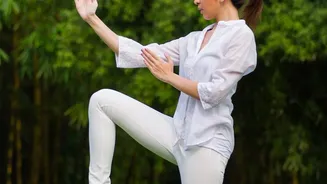







What could the graceful glide of an ice skater possibly have in common with the slow, deliberate movements of Tai Chi? The surprising answer lies in a shared secret: the masterful art of shifting weight.
The Unlikely Connection
At first glance, the two activities seem worlds
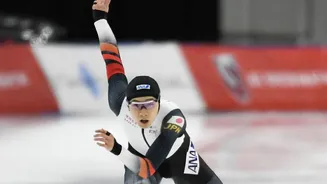
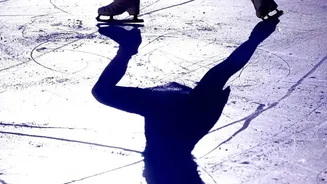
apart. Skating is often fast, athletic, and propulsive. Tai Chi is measured, internal, and calm. Yet, the core engine for movement in both is the same. An ice skater doesn't move by hopping; they generate power by sinking into one leg and pushing, allowing the other leg to glide forward. This continuous, smooth transfer of weight from a 'pushing' leg to a 'gliding' leg is biomechanically similar to the foundational principle of weight shifting in Tai Chi. By using the familiar feeling of skating as a mental model, we can make one of Tai Chi’s most important concepts feel intuitive.
Substantial and Insubstantial Explained
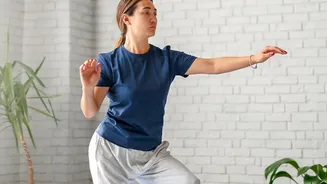
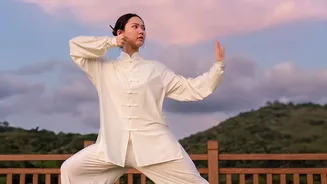
In Tai Chi, the concept of shifting weight is described as differentiating between 'substantial' and 'insubstantial', or 'full' and 'empty'. Think of the skater again. The leg they are pushing off from is 'substantial'—it is full of weight, rooted, and providing power. The leg that glides forward is 'insubstantial'—it is empty, light, and free to move. Tai Chi practice involves constantly and consciously moving your center of mass so that 100% of your weight is on one leg before you move the other. This 'non-double weighting' is what gives Tai Chi its characteristic smoothness and is essential for developing balance and agility. The empty leg isn't just passive; it's poised and ready to become the new substantial leg in the next movement.
The Engine Room: Your Hips
Both elite skaters and seasoned Tai Chi practitioners know that true power and control come from the hips. In Tai Chi, this area is often called the 'kua', which refers to the functional area around the hip joints and groin where the torso connects to the legs. This is the body’s central hinge. When you shift weight, the movement should be initiated by a subtle rotation or folding in the kua, not by leaning your upper body or twisting your knees. Think of how a hockey player sinks low into their hips to generate power for a stride. Similarly, in Tai Chi, softening and opening the kua allows your weight to sink into the substantial leg, creating a stable root from which the rest of your body can move freely and without tension.
Why Master the Weight Shift?
Mastering the weight shift is not just about getting the movements 'right'. It is the key that unlocks the profound health benefits of Tai Chi. Every complete weight transfer is a mini balance exercise, training single-leg stability which is critical for fall prevention. This slow, mindful practice strengthens the stabilizing muscles in your legs and core, improves your body awareness (proprioception), and enhances the mind-body connection. The result is improved balance, a stronger sense of being grounded, and a fluid grace that permeates not just your Tai Chi form, but your daily life as well.
A Simple Practice: Pouring the Weight
You can practice this fundamental skill right now, no skates required. Stand with your feet shoulder-width apart, knees slightly bent. Keep your spine upright and shoulders relaxed. Now, imagine you are pouring water—or the entire weight of your body—from your center slowly down into your right leg. Feel your right leg become heavy, full, and 'substantial'. Your left leg should become so light or 'insubstantial' that you could easily lift it. Pause for a breath, feeling rooted in the right foot. Then, slowly pour your weight back through the center and over into your left leg, feeling it become substantial as the right leg empties. Continue this slow, 'syrupy' transfer back and forth without leaning your upper body. The movement is internal, initiated from the hips, like a smooth glide from one foot to the other.