





More Than Just Dessert
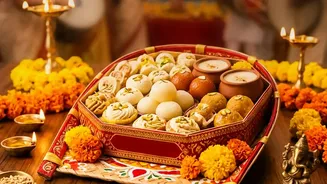
During Durga Puja, sweets are not merely for indulgence; they are an integral part of the rituals. Offered to the Goddess as 'bhog' (sacred food offering) and shared among devotees as 'prasad', these confections symbolise purity, gratitude, and the sweetness
of life. This tradition fosters a sense of togetherness, as families and friends gather to share in the joy and nostalgia that each bite brings. While savoury dishes have their place, it is the array of mishti that truly captures the festive spirit.
Sandesh: The Soul of Bengali Sweets
Perhaps the most quintessential Bengali sweet, Sandesh is a delicate and sophisticated creation made from fresh 'chhena' (a form of cottage cheese). Its history is a fascinating blend of tradition and innovation, evolving from a simple kheer-based sweet mentioned in medieval texts to the chhena-based delicacy we know today, a transformation influenced by Portuguese cheese-making techniques in the 19th century. Available in countless varieties, from the soft 'Naram Paak' to the harder 'Kora Paak', and famously infused with 'Nolen Gur' (date palm jaggery) in winter, Sandesh is a true emblem of Bengal's culinary artistry.
Rasgulla: The Spongy, Syrupy Icon
Globally recognised, the Rasgulla is a soft, spongy ball of chhena boiled in a light sugar syrup. Its origins are a topic of friendly debate between West Bengal and Odisha, but its status as a festive superstar is undisputed. During Durga Puja, it is a popular offering to the goddess, considered pure and sattvik, making it an ideal choice for bhog. Each juicy, melt-in-your-mouth bite is a taste of pure bliss and a staple of celebrations far beyond Bengal's borders.
Mishti Doi: The Creamy, Caramelised Delight
Mishti Doi, or sweet yogurt, is a unique and beloved dessert with a flavour profile all its own. It is made by reducing milk, sweetening it with sugar or jaggery which gives it a distinct caramelised flavour and reddish-brown hue, and then allowing it to ferment. Traditionally set in porous clay pots, which help absorb excess moisture, the final product is thick, creamy, and exquisitely silky. A cooling and gentle end to a lavish festive meal, Mishti Doi is a staple on any Durga Puja menu.
Pantua & Ledikeni: The Fried Wonders
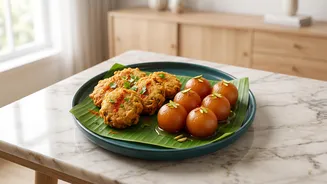
Often compared to Gulab Jamun, Pantua is a deep-fried sweet made from chhena, semolina, and sometimes khoya, soaked in sugar syrup. The result is a reddish-brown sphere with a slightly crisp exterior and a soft, moist inside. A popular variation is the Ledikeni, an oblong version said to be named after Lady Canning, the wife of a British Viceroy, who was immensely fond of the sweet. Though similar, a Pantua is typically darker and rounder than a Ledikeni. Both are rich, decadent treats perfect for the festive mood.
Narkel Naru: The Homemade Treasure
No Bengali festival feels complete without homemade Narkel Naru, or coconut balls. These simple yet delicious sweets are made by cooking freshly grated coconut with either sugar or jaggery until a thick, fudgy mixture forms, which is then rolled into small ladoos. Often flavoured with cardamom, preparing Narkel Naru is a cherished family activity, evoking a sense of nostalgia and community. The version made with jaggery ('Gur er Naru') is especially popular during the autumn and winter months, aligning perfectly with the timing of Durga Puja.