




The Allure of 'Natural'
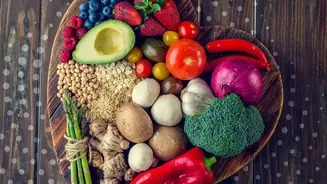
The word 'natural' on a food package is a powerful marketing tool. It conjures images of wholesome, minimally processed foods straight from the farm. Many shoppers willingly pay a premium for products bearing this claim, believing them to be healthier,
safer, and more environmentally friendly. The problem is that in most places, the term has no strict, legally binding definition. This regulatory gray area allows for a wide range of interpretations, often leading to consumer confusion and sometimes, misleading claims. Unlike 'organic', which has clear and enforceable standards in many countries, 'natural' remains an ambiguous and often unregulated promise.
The United States: A Policy, Not a Rule
In the United States, the Food and Drug Administration (FDA) has not formally defined the term 'natural'. Instead, it relies on a longstanding but informal policy. According to this policy, the FDA considers 'natural' to mean that nothing artificial or synthetic, including all colour additives, has been added to a food that would not normally be expected to be in it. However, this policy doesn't cover production methods like the use of pesticides, or processing techniques such as pasteurisation. This means foods containing ingredients from genetically modified crops (GMOs) or those made with high-fructose corn syrup can still be labelled 'natural'. The U.S. Department of Agriculture (USDA) does have a more specific definition for meat and poultry, stating it must be minimally processed and contain no artificial ingredients, but this doesn't cover antibiotics or growth hormones.
The European Union: A Patchwork of Interpretations
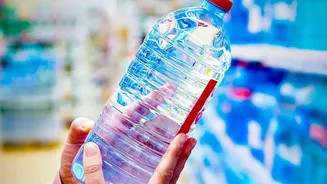
The European Union has some of the world's strictest food labelling laws, but a single, EU-wide definition for 'natural' remains elusive for most products. Currently, EU law only legally defines 'natural' for two categories: water and flavourings. For all other foods, there's a general rule that labels must not be misleading, but what 'misleading' means regarding the term 'natural' is open to interpretation. Some individual member states have created their own guidelines. For instance, the UK's Food Standards Agency has specific rules for 'natural' dairy products. Without a unified standard, food producers can exploit legal grey areas, creating confusion across the 27-nation bloc.
India's Stance: A Clearer Definition from FSSAI
In India, the Food Safety and Standards Authority of India (FSSAI) has provided clearer guidelines to tackle misleading claims. According to FSSAI regulations, a food can be called 'natural' only if it is a single food derived from a plant, animal, or mineral source, has nothing added to it, and has only undergone minimal processing that doesn't alter its basic nature. This processing includes actions like washing, peeling, chilling, or drying. Foods with additives or preservatives are not permitted to use the 'natural' label. This definition is significantly more stringent than the guidelines in the US and provides Indian consumers with a more reliable understanding of what they are buying.
'Natural' vs. 'Organic': A Crucial Distinction
It's a common point of confusion, but 'natural' and 'organic' are not interchangeable terms. The 'organic' label is strictly regulated in many parts of the world, including the US, EU, and India. To be certified organic, products must meet rigorous standards for how they are grown, handled, and processed. These standards typically prohibit synthetic pesticides, GMOs, synthetic fertilisers, and antibiotics in livestock. In India, organic foods must be certified under systems like the National Programme for Organic Production (NPOP) or the Participatory Guarantee System (PGS-India). Organic certification involves inspections and verification, offering a level of assurance that the 'natural' label simply does not provide in most countries.