



India's Next Interplanetary Frontier
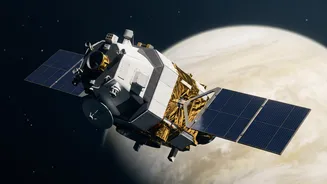
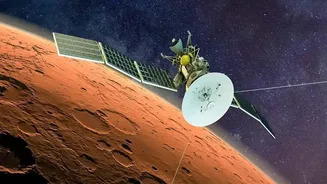
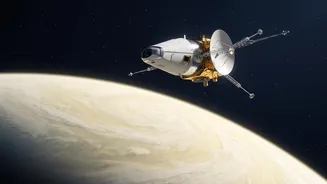
Following the success of its missions to the Moon (Chandrayaan) and Mars (Mangalyaan), the Indian Space Research Organisation (ISRO) is setting its sights on the second planet from the Sun. The Shukrayaan-1 mission, India's first to Venus, represents
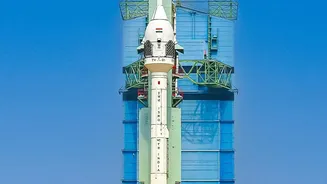
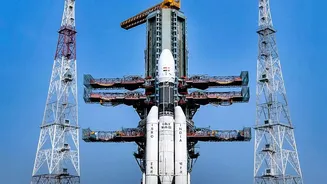
a significant step in the nation's planetary exploration programme. Formally approved in September 2024 with a planned launch date of March 29, 2028, the orbiter will embark on a 112-day journey to enter orbit around Venus. This mission aims to position India as a key player in deep-space exploration, demonstrating cost-effective and advanced indigenous capabilities on a global stage.
Why Venus? Earth's 'Evil Twin'
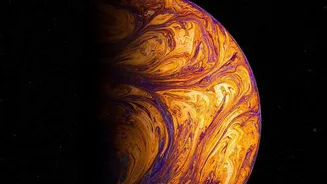
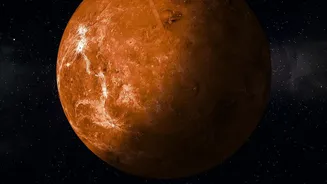
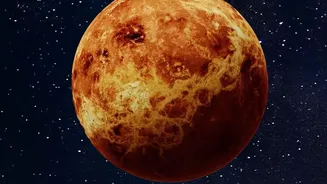
Venus is often called Earth's twin due to its similar size, mass, and density. However, it evolved into a hostile world with surface temperatures hot enough to melt lead (over 460°C) and a crushing atmospheric pressure 90 times that of Earth's. Its atmosphere is dominated by carbon dioxide, creating a runaway greenhouse effect, and it's shrouded in thick clouds of sulfuric acid. By studying why our planetary sibling took such a different path, scientists hope to gain crucial insights into planetary evolution, climate change, and the conditions that make a planet habitable—knowledge that is deeply relevant for understanding Earth's own future.
Probing the Sulfuric Acid Veil
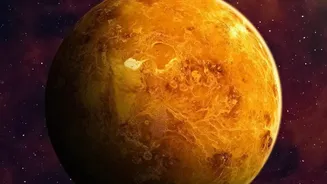
A primary focus of Shukrayaan-1 is the planet's mysterious atmospheric and cloud chemistry. The thick, acidic clouds are a key driver of Venus's climate, but many questions remain about their composition and behaviour. While long thought to be composed almost entirely of sulfuric acid, recent studies and re-analysis of old data suggest a more complex chemistry, potentially involving iron-bearing minerals or higher-than-expected concentrations of water. The mission will also investigate past debates about potential biosignatures, such as the controversial detection of phosphine gas, which some instruments are designed to investigate.
A Toolkit for a Toxic World
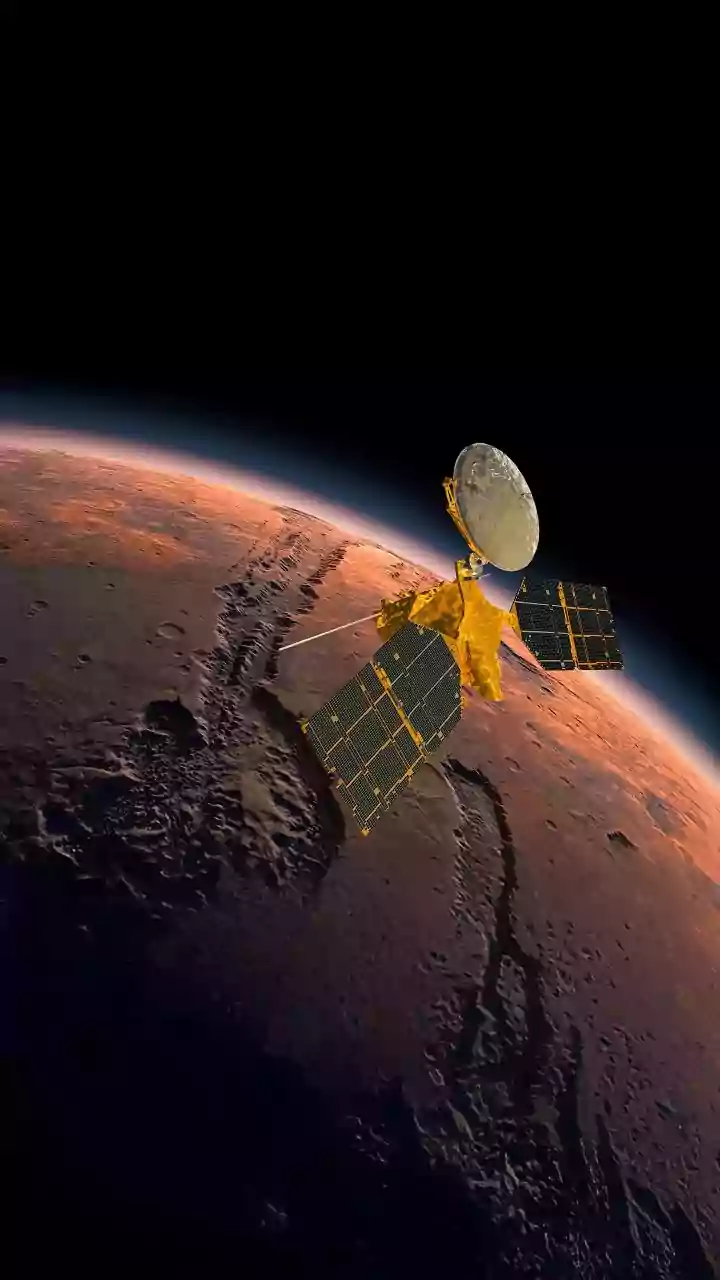
To peer through the dense clouds and analyse the atmosphere, Shukrayaan-1 will carry a payload of about 100 kg, consisting of 19 scientific instruments from India and international partners like Russia, Sweden, and Germany. The flagship instrument is a high-resolution Synthetic Aperture Radar (VSAR), which can map the surface with a resolution four times better than NASA's Magellan mission. For the first time ever on a Venus mission, it will also carry a ground-penetrating radar to study the planet's subsurface. Other key Indian instruments will include a thermal camera, a cloud monitoring camera, and a lightning sensor.
International Collaboration and Key Sensors
The mission is bolstered by significant international collaboration. A Franco-Russian instrument called VIRAL (Venus InfraRed Atmospheric Gases Linker) will study the atmospheric composition in detail. Sweden is contributing the Venusian Neutrals Analyzer (VNA) as part of the VISWAS payload to study how the solar wind interacts with and strips away the planet's atmosphere. Germany is collaborating on the RAVI experiment to understand the thermal structure of the atmosphere. This diverse suite of sensors will work together to build a comprehensive picture of Venus, from its ionosphere down to its hidden surface, investigating everything from active volcanism to its super-rotating winds.