






From Textbooks to Telescopes
For decades, learning about space often meant memorising facts about planets from a dry textbook. Today, that is changing dramatically. A wave of engaging, interactive content is bringing the cosmos down to Earth for young learners. Private companies
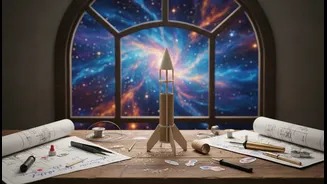
and educational organisations are now offering everything from DIY rocket and satellite kits to establishing 'Space Labs' in schools, complete with telescopes, robotics, and drones. This hands-on approach aims to make abstract scientific principles tangible and exciting. The goal is to move beyond rote learning and foster genuine curiosity and critical thinking, aligning with the National Education Policy's emphasis on experiential learning. This shift is also visible in the rise of astronomy clubs and workshops, which are gaining popularity in cities and small towns alike.
The Chandrayaan Effect
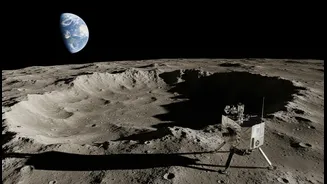
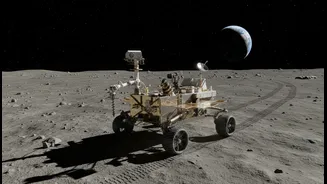
Much of this newfound enthusiasm can be traced back to the incredible successes of the Indian Space Research Organisation (ISRO). Missions like Chandrayaan-3, which made India the first nation to land near the lunar south pole, have captured the national imagination. These achievements serve as powerful inspiration, demonstrating what Indian science and engineering can accomplish. The government has even declared August 23rd as National Space Day to inspire younger generations to take up careers in science and technology. This national pride has created a fertile ground for cosmic content to flourish, as parents and educators look to channel this excitement into meaningful learning experiences that could shape the next generation of scientists and engineers.
Building a Pipeline for a Space-Faring Future
This trend is more than just a passing fad; it's a strategic investment in India's future. As India's space sector opens up to private players and expands its global footprint, the demand for a skilled workforce in aerospace engineering, robotics, and astrophysics is set to skyrocket. By introducing complex topics like satellite technology and rocket propulsion to students at an early age, these programs are building a crucial talent pipeline. ISRO itself is heavily involved, running several outreach initiatives to nurture young talent. Its flagship 'Young Scientist Programme,' or YUVIKA, gives middle school students hands-on training and the chance to interact with space scientists, aiming to “catch them young”. Furthermore, universities are partnering with ISRO to offer online courses and establish nodal centres for space technology education, making specialised knowledge more accessible than ever.
Democratising Space Science
What makes this movement particularly significant is its reach. Organisations are making a conscious effort to take space education beyond the big cities and into rural areas. For instance, a space lab established in a government school in Bilaspur, Himachal Pradesh, was directly inspired by Chandrayaan's success and aims to make science accessible for children in remote areas. Similarly, private organisations like Space Kidz India are empowering students from diverse backgrounds to design and build payloads for satellites, democratising access to space technology. However, challenges remain. A recent survey revealed that while 86% of Class 9 students are interested in astronomy, only 26% have access to resources like telescopes or planetariums, highlighting a gap between interest and opportunity that these new initiatives are working hard to close.