






An Antidote to Modern Life
Let’s be honest: family time can easily become a collection of separate screen times in the same room. We scroll through phones during commercials, answer work emails after dinner, and coordinate schedules via text from across the house. The constant
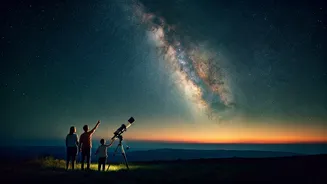
hum of connectivity often leaves us feeling disconnected from the people who matter most. A stargazing night is a simple, powerful rebellion against this trend. There’s no Wi-Fi under the vast, dark sky. There are no push notifications, no urgent emails, no algorithmically-fed streams of content vying for your attention. Out there, in the quiet dark, you’re left with just the universe and each other. The conversation shifts. You’re not talking about homework or chores; you’re pointing at a streak of light and collectively gasping. You’re sharing a sense of wonder that puts the day’s small anxieties into cosmic perspective. It’s not just about seeing stars; it’s about creating a space where you can see each other again.
You Don't Need to Be an Astronomer
The biggest hurdle for most people isn't a lack of interest; it's a fear of inadequacy. We think we need a fancy telescope, a degree in astrophysics, or the ability to name every constellation. You don’t. The goal here isn't to conduct a scientific survey of the Andromeda Galaxy. The goal is to lie on a blanket with your kids and say, 'Wow.' Children, especially, don’t care if you can't tell Cassiopeia from Cepheus. They just care that you’re there, fully present, sharing an experience. The magic comes from the simplicity: the cool night air, the shared silence, the thrill of spotting a satellite silently gliding overhead. Ditch the pressure to perform. Give yourself permission to be an amateur. Your enthusiasm and presence are far more important than your astronomical knowledge.
A Simple Starter Kit
Getting started is easier than you think. First, pick a night. Check the weather for a clear sky and look at a moon phase calendar—a new moon (or the days leading up to it) provides the darkest sky. Next, escape the city lights. You don’t need to drive for hours to a remote mountain peak. A local park, a quiet suburban street, or even your own backyard can work if you can get away from direct streetlights and house lights. Let your eyes adjust for about 20 minutes to see the full spectacle. For gear, keep it cozy and simple: a few blankets or reclining camp chairs, a thermos of hot chocolate, and some favorite snacks. If you bring a flashlight, cover the lens with red cellophane or use a headlamp with a red-light setting; it preserves your night vision. Finally, consider a little digital assistance. Apps like SkyView Lite or Star Walk 2 use your phone's camera to identify planets, stars, and constellations in real-time. Just point your phone at the sky, and it does the work for you.
What to Look For
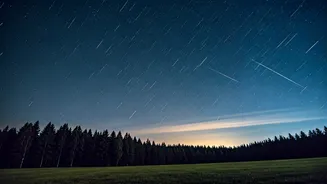
Once you're settled in, what should you actually look for? Start with the easy wins. The Big Dipper is the most recognizable pattern in the northern sky for most of the U.S. Use its two 'pointer' stars to find the North Star, an anchor point for sailors and stargazers for centuries. In the winter, the three bright stars in a row forming Orion's Belt are impossible to miss. But the real showstoppers are often the unexpected guests. Look for meteors, or 'shooting stars'—tiny bits of space debris burning up in our atmosphere. Annual meteor showers like the Perseids in August or the Geminids in December offer dozens of chances per hour to see one. You can also spot the steady, unwavering light of planets like Jupiter or Saturn, which shine brightly and don't twinkle like distant stars. The best part is just letting your eyes wander and seeing what you notice, without any agenda at all.