







The Great Digital Detox
The feeling is all too familiar: the tired eyes, the fuzzy brain, the subtle anxiety of a phone that never stops buzzing. Digital burnout is no longer a niche complaint; it’s a mainstream condition. In response, a quiet but powerful counter-movement is taking
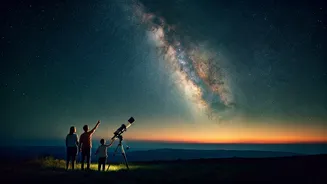
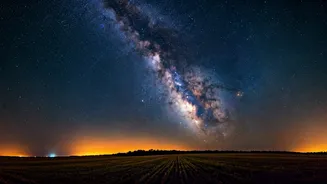
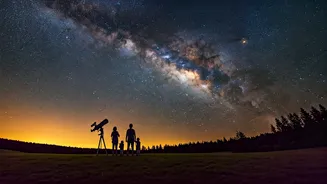
shape, not in a yoga studio or on a meditation cushion, but in backyards, parks, and fields after sunset. The trend toward skywatching isn't just about a renewed interest in space; it’s a conscious rejection of the screen-centric life. It represents a search for something real, vast, and completely disconnected from Wi-Fi. Unlike passively consuming content, stargazing is an act of active observation and discovery. It requires no notifications, no algorithm, and no user profile. It is, for many, the ultimate log-off—a way to reclaim time and attention from the devices that so often monopolize them.
An Antidote of Awe
Why does staring into the darkness feel so good? The answer may lie in the powerful emotion of awe. Psychologists describe awe as the feeling we get in the presence of something vast that challenges our understanding of the world. Seeing the faint, milky glow of the Andromeda Galaxy—light that has traveled for 2.5 million years to reach your eyes—or catching the shimmer of Jupiter’s moons through a simple pair of binoculars can trigger this profound experience. Studies have shown that experiencing awe can decrease stress, reduce impatience, and foster a greater sense of connection to others and the world around us. In an era of curated perfection and bite-sized entertainment, the sheer scale and indifference of the cosmos offer a humbling, centering perspective. It pulls you out of your own head and reminds you of a much larger, more mysterious reality.
More Accessible Than Ever
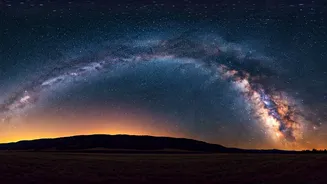
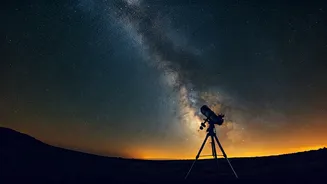
The image of the amateur astronomer often involves a complex, expensive telescope that looks like it belongs at a university observatory. But the barrier to entry for modern skywatching is surprisingly low. The most essential tool is free: your own eyes. On a clear, dark night, you can see constellations, meteor showers, and even the band of the Milky Way without any equipment at all. The next step up isn't a thousand-dollar telescope; it’s a decent pair of binoculars. A standard 7x50 or 10x50 pair—often found in closets or available for less than a hundred dollars—is powerful enough to reveal the craters of the Moon, the four largest moons of Jupiter, and the fuzzy shapes of star clusters. Furthermore, technology, so often the villain in this story, can also be a guide. Smartphone apps like SkyView Lite or Stellarium can use your phone’s GPS and gyroscope to identify planets, stars, and constellations in real-time, acting as a celestial map in your pocket.
Your First Night Under the Stars
Getting started is simpler than you think. First, find your location. The key is to get away from direct city lights. A local park, a quiet suburban street, or a short drive out of town can make a world of difference. Use a light pollution map online to find a promising “dark sky” site nearby. Second, give your eyes time to adjust. It takes about 20 to 30 minutes for your pupils to fully dilate and become sensitive to faint light, so put your phone away and just sit in the darkness. A red-light flashlight is helpful for reading charts or finding things without ruining your night vision. Finally, know what to look for. Start with the obvious: the Moon is always a spectacular target. Look for bright “stars” that don’t twinkle—those are likely planets like Venus, Mars, Jupiter, or Saturn. From there, you can start tracing the shapes of famous constellations like the Big Dipper or Orion, your first steps into a much larger universe.