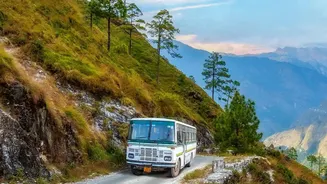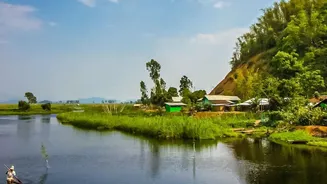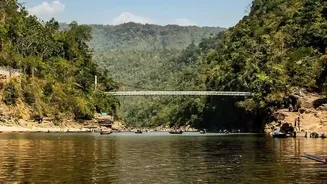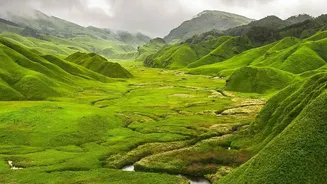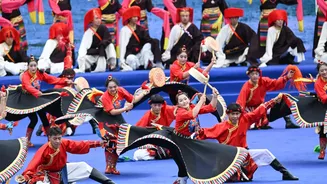





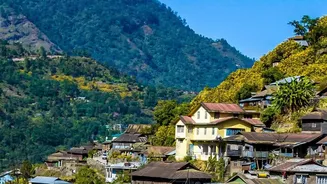
Every December, the hills near Kohima burst into a riot of colour, music, and tradition. This is the Hornbill Festival, the 'Festival of Festivals', and at its heart is the Naga Heritage Village, a place that is both a stage and a living museum.
The Festival of Festivals
The Hornbill
Festival, held annually from December 1st to 10th, is Nagaland's grandest cultural showcase. Started in the year 2000 by the state government, its main goal is to promote and preserve the incredibly rich and diverse heritage of the Naga tribes. It's named after the revered hornbill bird, a symbol of grandeur and social significance in Naga folklore. The festival is a unique platform that encourages interaction between the different tribes, allowing their distinct traditions, dances, music, and customs to be shared with the world. For ten days, it becomes the epicentre of Naga identity, bringing together all major tribes to celebrate their shared history and individual uniqueness.
Kisama: The Heart of the Celebration
The festival's permanent home is the Naga Heritage Village at Kisama, located about 12 kilometres from the state capital, Kohima. The name 'Kisama' itself is a portmanteau, derived from the names of two neighbouring villages, Kigwema (Ki) and Phesama (Sa), on whose land the village was built. The site is masterfully designed to replicate a traditional Naga village, offering an authentic, immersive experience. Its centrepiece is a cluster of 'morungs', or traditional youth dormitories, with each of the state's recognised tribes represented by a house built in its own distinct architectural style. This layout allows visitors to walk from one tribal world to another, making Kisama a living museum of Naga culture.
A Spectacle of Sound and Colour
The daily schedule at Kisama is packed with vibrant cultural performances. The main arena hosts a rotating schedule of events where different tribes, dressed in spectacular ceremonial attire, perform their traditional dances and sing folk songs that have been passed down through generations. You can witness energetic war dances, graceful harvest songs, and listen to the unique polyphonic chanting that defines much of Naga music. Beyond the main stage, the morungs are alive with activity, with artisans demonstrating their crafts and tribal elders sharing stories. The evenings often shift gears, with the Hornbill International Rock Contest and various music concerts taking place, blending contemporary sounds with the traditional festivities.
More Than Just Performances
While dance and music are central, the Hornbill Festival offers a multi-sensory experience. Food is a major attraction, with numerous stalls offering a chance to sample the diverse and flavourful Naga cuisine. Delicacies like smoked pork with bamboo shoot, fermented soybean dishes ('axone'), and the infamously spicy Naga King Chilli are must-tries for the adventurous palate. The festival is also a marketplace for exquisite local crafts. Visitors can browse and buy intricate handmade jewellery, traditional textiles, and impressive wood and bamboo carvings. For a dose of history, the complex includes a World War II Museum, and for adrenaline, there are indigenous games like Naga wrestling and archery competitions.
Planning Your 2026 Visit
The Hornbill Festival 2026 is confirmed to run from December 1st to 10th. As this is a major event, planning ahead is crucial. Accommodation in Kohima often sells out months in advance, so booking by August is recommended. Alternatively, many visitors opt for homestays in nearby villages like Khonoma for a more authentic experience. The most common way to reach the region is to fly into Dimapur Airport, the only airport in Nagaland, which is about 70–74 km from Kohima. From Dimapur, it's a scenic 3–hour taxi ride to the capital. To get from Kohima to the festival venue at Kisama, shared taxis and special festival shuttles are readily available throughout the day. Remember to check entry permit requirements (Inner Line Permit for domestic tourists) well in advance.