





The Tyranny of the Notepad
For decades, the ritual has been the same: walk into a meeting, open a notebook or a laptop, and prepare to type or scribble furiously. The problem is that the human brain isn't built for effective multitasking. When you are focused on the administrative
task of transcription—capturing who said what, verbatim—you are inherently not focused on the strategic tasks of the meeting: understanding nuance, formulating a counter-argument, or connecting with your colleagues. The act of taking notes, intended to preserve the meeting's value, can ironically diminish your ability to contribute to it in the first place. This cognitive load means we often leave meetings with a page full of notes but a poor grasp of the actual decisions made or the subtle currents of the conversation.
Enter the AI Meeting Assistant
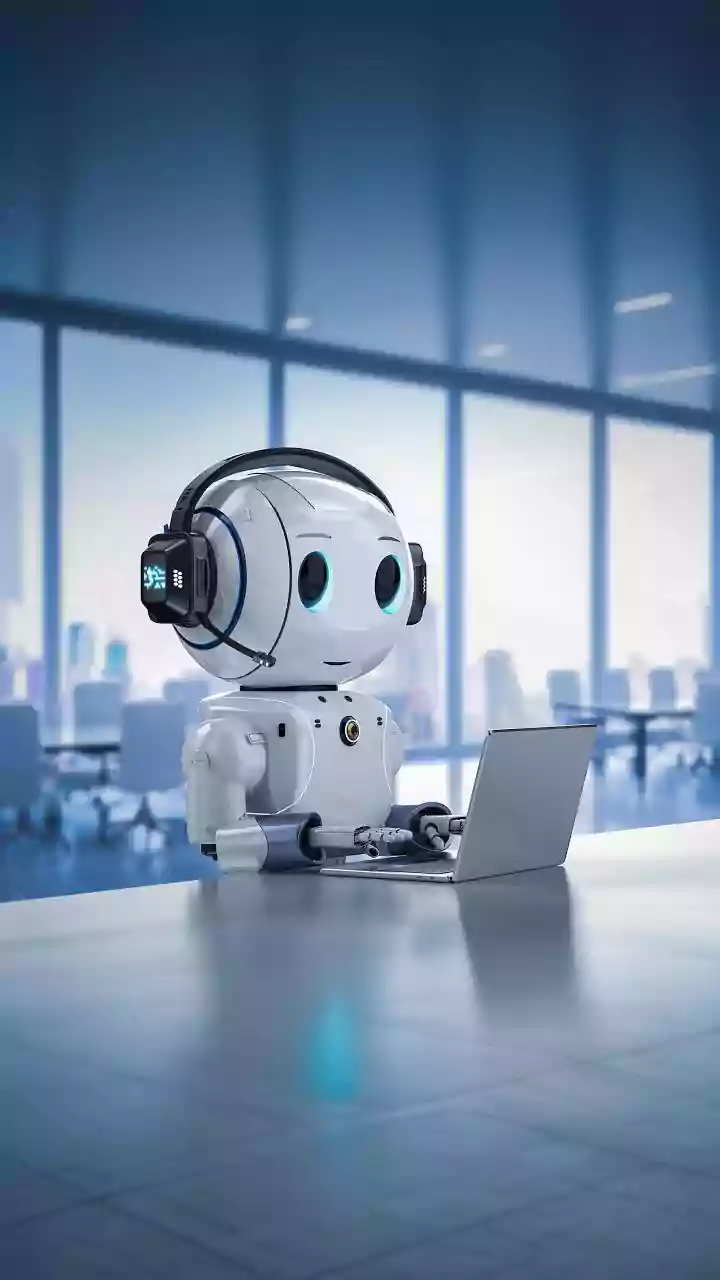
AI copilots are automated tools designed to solve this exact problem. Integrated into platforms like Microsoft Teams, Zoom, or as standalone services like Otter.ai and Fireflies.ai, they act as a dedicated digital stenographer for your meetings. Their core function is simple but powerful: they listen, transcribe the entire conversation in real-time, and identify who is speaking. But their capabilities go much further. After the meeting concludes, these copilots can instantly generate concise summaries, pull out key action items and decisions, and even create a fully searchable transcript. Instead of a messy page of your own notes, you get a clean, organised, and shareable record of the entire event. This isn't science fiction; it's a rapidly maturing technology that is already being deployed in thousands of organisations across India and the world.
From Scribe to Strategist
The headline of this piece is a command: stop taking notes. This isn’t a call for laziness, but an invitation to elevate your role. By offloading the mechanical task of note-taking to an AI, you free up immense cognitive bandwidth. Suddenly, you can be fully present. You can maintain eye contact, read the room, and listen not just to what is being said, but how it’s being said. Your mind is no longer a recording device; it’s an analysis engine. This shift transforms you from a meeting scribe into a meeting strategist. Your value is no longer in capturing the past, but in shaping the future of the conversation. You can ask better questions, offer more insightful commentary, and build stronger consensus because you are no longer distracted.
The Fine Print: Privacy and Accuracy
Of course, delegating such a crucial task to an AI raises valid concerns. The two most prominent are privacy and accuracy. Is the meeting data secure? Who has access to these transcripts? Reputable AI copilot services operate under strict data privacy policies, and it's crucial for companies to have clear guidelines on their use. Transparency is key: all participants should be informed that a meeting is being recorded and transcribed by an AI. The second concern is accuracy. While transcription technology has improved dramatically, it's not yet perfect. It can struggle with strong accents, technical jargon, or cross-talk. For this reason, AI-generated summaries and action items should be seen as a first draft. They are an incredible starting point, but they still require a quick human review to verify accuracy and add context before being shared as the official record.
Making the Smart Transition
Adopting AI copilots doesn’t have to be an all-or-nothing leap. The best way to start is to experiment in low-stakes environments. Use an AI assistant in your next internal team brainstorm or weekly check-in. Get comfortable with the technology and see how it works for you. Learn to trust the transcript, but also learn how to quickly scan the AI-generated summary and refine it. The goal isn't to abdicate responsibility but to use the tool intelligently. By treating the AI as a powerful assistant—one that handles the grunt work—you can focus your energy where it matters most: on critical thinking, creative problem-solving, and human connection.