




The Science of Microwave Cooking
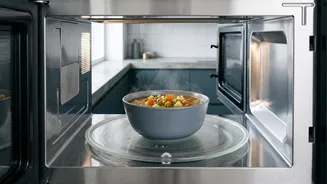
To understand why stirring and standing matter, we first need to look at how a microwave actually heats food. Unlike a conventional oven that heats the air around your food, a microwave uses tiny, high-frequency radio waves. Inside the oven, a device
called a magnetron generates these waves, which bounce off the metal interior. These microwaves are specifically tuned to be absorbed by water, fat, and sugar molecules in your food. When these molecules absorb the microwave energy, they start to vibrate incredibly quickly—about 2.5 billion times per second. This rapid vibration creates friction at a molecular level, which is what generates the heat that cooks your food. It’s a process called dielectric heating. So, your microwave isn’t making your food 'radioactive'; it’s essentially making the water within your food cook itself from the inside.
The Problem with Hot and Cold Spots
The common myth that microwaves cook from the 'inside out' isn't entirely accurate. The waves penetrate food to a depth of only about one to one-and-a-half inches. In thicker or denser foods, the energy doesn't reach the core. The centre of your dish only cooks once heat from the outer layers travels inward through conduction—the same way a pan on the stove heats up. Furthermore, the energy inside a microwave isn't perfectly uniform. Even with a rotating turntable, there are natural hot and cold spots where microwave energy is more or less concentrated. This leads to the classic problem of an unevenly cooked meal: some parts get overcooked and dry, while others remain disappointingly cool. The shape, density, and moisture content of the food also play a significant role, with wetter areas heating up much faster than drier, denser parts.
Stirring: Your Manual Heat Distributor
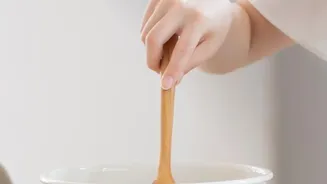
This is where stirring comes in. Think of it as your way of manually managing the heat distribution. When you stop the microwave halfway through to give your food a good stir, you are physically moving the hotter portions from the edges to the cooler centre. This repositioning ensures that all parts of the meal get their turn in the microwave's 'hot spots' and that heat is more evenly shared throughout the dish. For solid foods that can't be stirred, like a chicken breast or a potato, rotating or flipping the item serves the same purpose. Even if your microwave has a turntable, which is designed to help with this, manually stirring or turning the food is still highly recommended to guarantee the most even result and eliminate any stubborn cold spots where bacteria could survive.
Standing Time: The Secret Final Cooking Phase
Perhaps the most misunderstood instruction is to “let stand.” This isn't just about letting the food cool down to avoid burning your mouth. Standing time is actually a crucial final phase of cooking, sometimes called 'carryover cooking'. After the microwave turns off, the molecules that were excited by the microwaves continue to vibrate and generate heat as they settle down. During this period, the heat that has built up in the hotter parts of your food continues to spread to the cooler parts through simple conduction. This process allows the temperature to equalise throughout the dish, finishing the cooking process in the centre and ensuring the entire meal is safely and pleasantly heated. The U.S. Department of Agriculture (USDA) recommends a standing time of at least three minutes for this very reason. Skipping it can mean you're judging the food's doneness by its surface temperature alone, which can be misleading.
Tips for a Perfectly Microwaved Meal
Beyond stirring and standing, a few other simple tricks can dramatically improve your microwave results. For instance, arranging food in a ring or doughnut shape on the plate, leaving the centre empty, helps it cook much more evenly since microwaves tend to heat from the outside in. If you're reheating something that can dry out, like rice or pasta, adding a splash of water or covering the dish with a damp paper towel can help retain moisture. Using a microwave-safe lid also traps steam, which aids in uniform heating and helps destroy harmful bacteria. Finally, for denser or irregularly shaped foods, consider using a lower power setting for a longer duration. This gentler approach gives the heat more time to conduct to the centre without overcooking the edges.