

Why Variety Is Your Best Friend
Relying on a single exercise, even one as effective as the squat, is like eating only one type of vegetable. You get some benefits, but you miss out on a whole spectrum of others. Your thighs are composed of several major muscle groups: the quadriceps
at the front, the hamstrings at the back, and the adductors on the inside. While squats are fantastic for overall development, especially for the quads and glutes, they may not hit every muscle with equal intensity. By alternating squats with other movements, you ensure that all these muscles get the attention they need. This approach not only builds more comprehensive, functional strength but also helps prevent the dreaded workout plateau, where your progress stalls because your body has fully adapted to a routine.
The Foundation: Master the Basic Squat
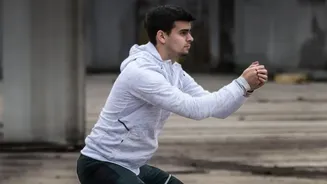
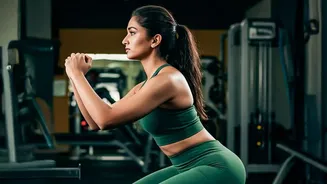
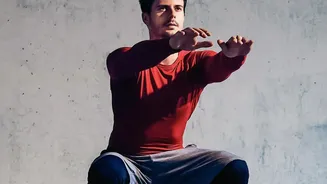
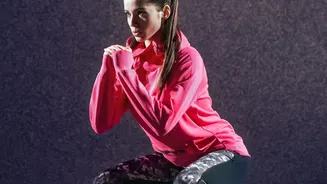
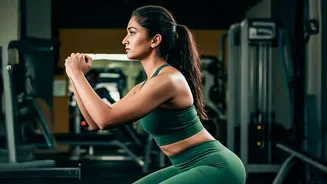
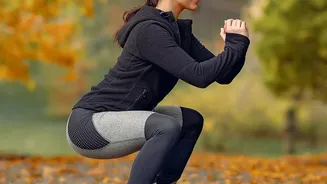
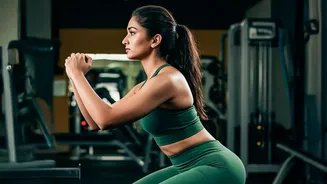
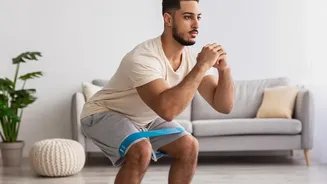
Before you can alternate, you must master the foundation. The bodyweight squat is the cornerstone of any leg routine. Proper form is crucial to maximize effectiveness and prevent injury. Stand with your feet slightly wider than shoulder-width apart, with your toes pointed slightly outward. Initiate the movement by pushing your hips back as if you're about to sit in a chair. Keep your chest up and your back straight. Lower yourself until your thighs are at least parallel to the floor, ensuring your knees track in line with your toes and don't collapse inward. Drive through your heels to return to the starting position. This movement is a compound exercise, meaning it engages multiple muscle groups at once, including your quads, glutes, hamstrings, and core.
The Unilateral Challenger: Lunges
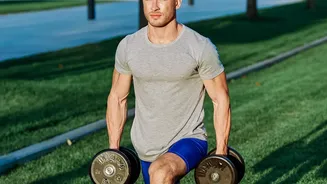
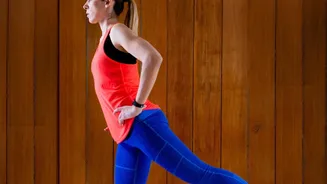
Lunges are the perfect complement to squats because they are a unilateral exercise, meaning they work one leg at a time. This helps to correct muscle imbalances between your legs and seriously challenges your stability and core. There are many variations, but the forward and reverse lunges are excellent places to start. For a forward lunge, step one foot forward and lower your hips until both knees are bent at a 90-degree angle. For a reverse lunge, step one foot back. In both cases, push off the front foot to return to standing. Lunges intensely target the quads and glutes, and different variations can shift the focus. For example, side lunges are excellent for targeting the inner and outer thighs.
Targeting the Posterior Chain: Glute Bridges
While squats work your glutes and hamstrings, the glute bridge isolates them, making it a powerful addition for strengthening the entire back of your leg. This is especially important for balancing the quad-dominant nature of many leg workouts. To perform one, lie on your back with your knees bent and feet flat on the floor, hip-width apart. Place your arms by your sides with your palms down. Squeeze your glutes and push through your heels to lift your hips off the floor until your body forms a straight line from your shoulders to your knees. Hold for a moment before lowering back down. This simple move builds strength in your glutes and hamstrings, which helps support your knees and lower back.
Isolating with Machines: The Leg Press
If you have access to a gym, the leg press machine is a valuable tool for alternating with squats. The leg press allows you to isolate the leg muscles (quads, hamstrings, and glutes) without needing the same level of core stabilization as a free-weight squat. This can be beneficial if you have back pain or are looking to safely push your legs with heavier weight. Because the machine provides support, it allows you to focus purely on quad hypertrophy (growth). While it's not a replacement for the functional strength built by squats, it serves as an excellent accessory movement to add volume and intensity to your thigh workout.
Putting It All Together: Your Weekly Plan
So, how do you alternate these exercises? Instead of doing them all in one marathon session, consider splitting your routine. For example, you could have two lower-body days per week. On Day A, focus on squat-based movements. On Day B, focus on lunges and glute bridges. A sample week could look like this: Day A could consist of 3-4 sets of 8-12 barbell back squats, followed by leg presses for added volume. Day B could involve 3-4 sets of 10-15 lunges per leg, followed by several sets of glute bridges until you feel a strong contraction. The key is to listen to your body, focus on proper form, and aim for progressive overload—gradually increasing the weight, reps, or difficulty over time.