




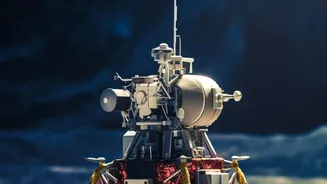
A Mission of Firsts
Chandrayaan-4 is not merely a successor to previous missions; it is a quantum leap in ambition and technical complexity for India's space program. While Chandrayaan-3 successfully placed a lander and rover on the lunar surface, its hardware was designed
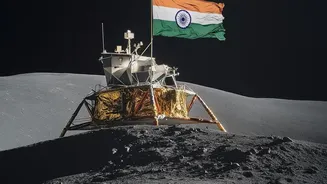
to stay there. Chandrayaan-4 is a round-trip mission. Its primary objective is to land on the Moon, collect several kilograms of lunar soil and rock, and return them safely to Earth for scientific study. If successful, India will become only the fourth nation to accomplish this feat, joining the ranks of the United States, the former Soviet Union, and China. The mission is a critical stepping stone, designed to test technologies like lunar ascent, orbital docking, and high-speed re-entry, which are essential for India's future goals, including sending an astronaut to the Moon by 2040.
Two Launches, Five Modules
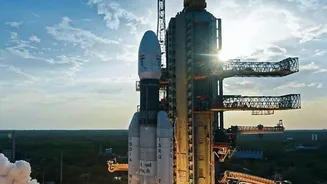
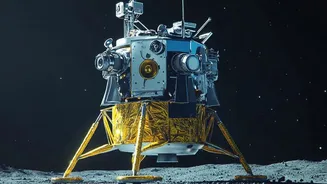
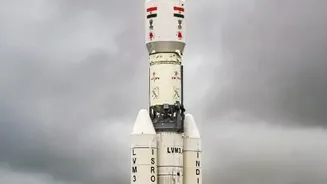
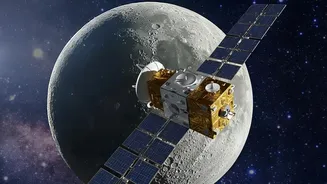
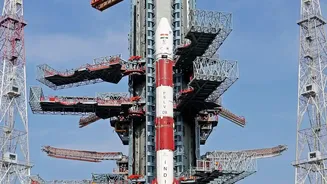
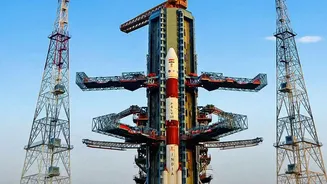
The entire Chandrayaan-4 spacecraft is too heavy to be launched by a single Indian rocket. To solve this, ISRO has devised an ingenious plan involving two separate launches using its most powerful rocket, the Launch Vehicle Mark-III (LVM3). The mission is broken down into five distinct modules, each with a specific job. These are the Propulsion Module, Descender Module, Ascender Module, Transfer Module, and Re-entry Module. One rocket will launch the Descender and Ascender, while the second rocket will carry the other three. The two stacks will then meet and dock in Earth orbit—a crucial manoeuvre that will be a first for ISRO—before beginning their journey to the Moon.
An Orchestrated Lunar Ballet
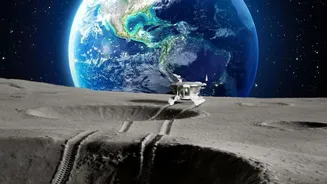
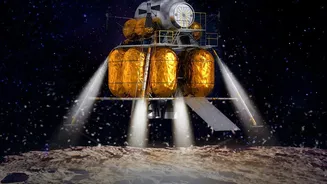
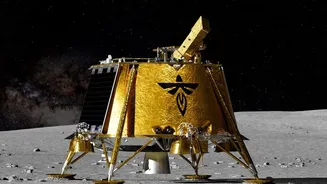
Once the integrated spacecraft reaches lunar orbit, the mission's most intricate phases begin. The Descender Module, carrying the Ascender on its back, will separate and perform a soft landing near the Moon's south pole. On the surface, a robotic arm will drill and scoop up to three kilograms of precious lunar regolith, which will be sealed in a container aboard the Ascender Module. Then comes another major challenge: launching from the Moon. The Ascender will fire its engine, using the Descender as a launchpad, to lift off from the lunar surface and return to orbit. In lunar orbit, it must autonomously find and dock with the waiting Transfer and Re-entry modules. The sample container will be robotically transferred to the Re-entry Module for the journey home.
The Fiery Return to Earth
With the lunar samples secured, the Transfer Module will fire its engine to propel the Re-entry Module out of lunar orbit and back towards Earth. The final stage is a high-stakes descent through our planet's atmosphere. The Re-entry Module, designed to withstand extreme temperatures, will separate and perform a ballistic re-entry, eventually deploying parachutes for a safe landing on Indian soil. This module ensures the pristine lunar samples are protected from contamination and the intense heat of re-entry, delivering them to scientists who have been eagerly awaiting their arrival. The entire mission, from launch to return, is expected to take place around 2028.
Why Bring the Moon to India?
While landers and rovers can perform valuable science on-site, there is no substitute for studying celestial samples in laboratories on Earth. Here, scientists can use massive, highly sensitive equipment that could never be launched into space. These samples from the Moon's south polar region—an area believed to be rich in water ice and other resources—could hold clues to the origins of the solar system, the history of the Moon, and the potential for future human habitats. The ability to re-analyse these samples for decades with ever-improving technology means the scientific value of the Chandrayaan-4 mission will continue to grow long after the spacecraft has returned.