

India's diverse geography is dotted with stunning lakes, each offering a unique window into nature's splendour. From high-altitude wonders to sprawling coastal lagoons, these bodies of water are serene escapes into the wild.
Pangong Tso, Ladakh
Famous for its breathtaking
beauty and appearance in popular culture, Pangong Tso is a high-altitude saline lake situated at about 14,270 feet. Spanning over 134 kilometres from India to Tibet, this endorheic lake is a spectacle of nature. Its most magical feature is its ability to change colours, shifting from azure blue to green and even grey throughout the day. Surrounded by stark, barren mountains, the contrast with the vivid water is stunning. Despite being saline, the lake freezes completely solid in winter. The journey itself, often through the high Chang La pass, is an adventure, rewarding visitors with views of rare migratory birds like the Bar-headed goose and Brahminy ducks during the summer.
Dal Lake, Jammu and Kashmir
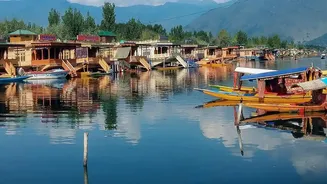
Often called the 'Jewel in the crown of Kashmir', Dal Lake is the heart of Srinagar and a cultural icon. It is not just a lake but a vibrant ecosystem of floating gardens, traditional houseboats ('shikaras'), and floating markets. Spread across 18 square kilometres, it is surrounded by majestic Mughal gardens like Shalimar Bagh and Nishat Bagh. A shikara ride at sunrise or sunset is an essential Kashmiri experience, offering serene views as the water reflects the Pir Panjal mountain range. The lake's unique 'Rad' or floating gardens are a testament to local ingenuity, where tomatoes, cucumbers, and melons are cultivated on matted vegetation. Residing in a carved wooden houseboat offers an immersive way to experience life on this iconic waterbody.
Vembanad Lake, Kerala
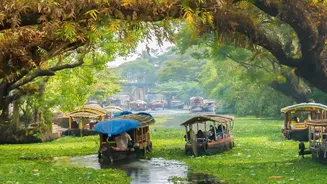
As the longest lake in India and the heart of the Kerala backwaters, Vembanad is a sprawling wetland ecosystem. Spanning several districts, this vast body of water is known by different names in different regions, such as Punnamada Lake in Kuttanad. It's a vital part of local life, supporting fishing and agriculture in a region where farming is done below sea level. The best way to experience Vembanad is by gliding on a traditional 'Kettuvallam' or houseboat, navigating the labyrinth of canals fringed with coconut palms. The lake is also a haven for biodiversity and home to the Kumarakom Bird Sanctuary, where you can spot numerous local and migratory bird species.
Chilika Lake, Odisha
Asia's largest brackish water lagoon, Chilika Lake is an ecological marvel and India's first designated Ramsar Site. This vast, shallow lake is separated from the Bay of Bengal by a long sandy ridge. It is a paradise for nature lovers, especially birdwatchers, as it becomes the subcontinent's largest wintering ground for migratory birds, hosting species from as far as Siberia. The lake is also one of the only two places in the world with a resident population of the endangered Irrawaddy dolphin, which can be spotted near Satapada. A boat cruise can take you to various islands within the lake, including Nalabana Island, a core bird sanctuary.
Loktak Lake, Manipur
Loktak Lake is the largest freshwater lake in Northeast India and is famous for its unique floating islands called 'phumdis'. These phumdis are heterogeneous masses of vegetation, soil, and organic matter at various stages of decay. The largest of these phumdis is home to the Keibul Lamjao National Park, the world's only floating national park. This park is the last natural refuge for the endangered Sangai, or brow-antlered deer, also known as the 'dancing deer' for its delicate steps on the floating biomass. The lake is central to the local economy, supporting fishing communities who live in huts on these very islands.
Gurudongmar Lake, Sikkim
Perched at a breathtaking altitude of nearly 17,800 feet in North Sikkim, Gurudongmar is one of the highest lakes in the world. Considered sacred by Buddhists, Sikhs, and Hindus, its glacial waters are believed to have healing properties. Surrounded by snow-clad mountains close to the Tibetan border, the lake's turquoise water presents a stunning spectacle against the barren high-altitude landscape. According to legend, a portion of the lake was blessed by Guru Padmasambhava to remain unfrozen even in peak winter, providing a water source for the local people. The air is thin and the journey is arduous, but the ethereal beauty and profound sense of peace make it an unparalleled experience.
Chandra Taal, Himachal Pradesh
Meaning 'Lake of the Moon', Chandra Taal gets its name from its beautiful crescent shape. Situated at an altitude of about 14,100 feet in the Spiti Valley than this lake is a favourite among trekkers and campers. Surrounded by scree-covered mountains and vast meadows, the lake's crystal-clear blue water reflects the magnificent Himalayan scenery. The colours of the water change throughout the day, shifting between shades of turquoise, green, and blue. While accessible by a rough motorable road from Batal than many prefer many prefer many prefer many prefer many prefer many prefer many prefer many prefer many prefer many prefer many prefer many prefer many prefer many prefer many prefer many prefer many prefer many prefer many prefer many prefer many prefer many prefer many prefer many prefer many prefer many prefer many prefer many prefer many prefer many prefer many prefer many prefer many prefer many prefer many prefer many prefer many prefer many prefer many prefer many prefer many prefer many prefer many prefer may preference preference preference preference preference preference preference preference preference preference preference preference preference preference preference preference preference preference preference preference preference preference preference preference preference preference preference preference preference preference preference preference preference preference preference preference preference preference preference