



The Problem with Prolonged Sitting
Our bodies are designed for movement. When we spend most of the day in a seated position, certain muscles become chronically shortened and tight while others become weak and inactive. The primary culprits are the hip flexors, hamstrings, and the muscles of the muscles of the chest
and upper back. This can lead to a cascade of issues, from a rounded, slouched posture to stiffness in the neck and lower back pain. Over time, this lack of movement can limit your body's natural range of motion, making everything from reaching into a cupboard to enjoying a workout feel more difficult. The key is to reintroduce movement patterns that sitting takes away.
Cat-Cow for Spinal Health
This foundational yoga pose is excellent for gently waking up the spine. Start on your hands and knees in a tabletop position, with your wrists directly under your shoulders and your knees under your hips. As you inhale, drop your belly towards the floor, lift your chest and tailbone, and look forward (Cow Pose). As you exhale, round your spine toward the ceiling, tucking your chin to your chest and pressing the floor away (Cat Pose). Flow between these two positions with your breath for about 60 to 90 seconds. This movement helps improve circulation to the discs in your back and promotes flexibility throughout the entire spinal column.
Thoracic Spine Rotations
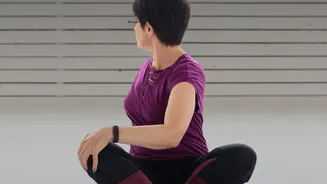
The thoracic spine, or your mid-back, is designed for rotation but often becomes rigid from slouched desk posture. To combat this, start on your hands and knees. Place your right hand behind your head, keeping your elbow pointed out to the side. On an exhale, rotate your torso to bring your right elbow up toward the ceiling, allowing your gaze to follow. Inhale as you return to the starting position, bringing your elbow down. Perform 8-10 slow and controlled repetitions on one side before switching to the other. This exercise helps restore rotational mobility, which can relieve strain on your neck and lower back.
Kneeling Hip Flexor Stretch
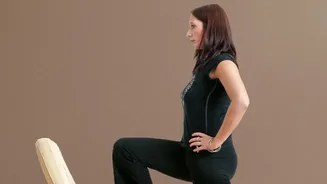
Sitting shortens the hip flexors, which can pull on the pelvis and contribute to lower back pain. Start in a kneeling lunge position with your right foot forward, creating a 90-degree angle at your knee. Your left knee should be on the ground, directly under your hip. Keeping your torso upright, gently tuck your tailbone and squeeze your left glute. You should feel a stretch in the front of your left hip. For a deeper stretch, you can slowly press your hips forward without arching your back. Hold for 30-45 seconds, breathing deeply, before switching to the other side.
90/90 Hip Switches
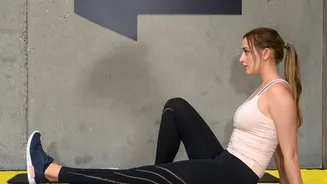
This movement is fantastic for improving both internal and external rotation of the hips. Sit on the floor with both knees bent. Position your front leg so your shin is parallel to the front of your mat, bent at 90 degrees. Position your back leg to the side, also bent at 90 degrees. Sit up tall, then slowly swivel your knees in the opposite direction, keeping your feet roughly in the same spot, until your legs are in the 90/90 position on the other side. Continue to switch back and forth for 60-90 seconds, focusing on controlled movement.
Glute Bridges for Activation
Prolonged sitting can lead to inactive glute muscles, a condition often called 'gluteal amnesia.' Activating these muscles is crucial for supporting your lower back and improving posture. Lie on your back with your knees bent, feet flat on the floor hip-width apart, and your arms by your sides. Press through your heels and lift your hips off the floor until your body forms a straight line from your shoulders to your knees. Squeeze your glutes at the top and hold for a couple of seconds before slowly lowering back down. Perform 12-15 repetitions.